
News
Earnings Season 101: Beats, Misses and Guidance, Explained With This Week’s Reports
Western Union beat on profit but missed slightly on revenue, while Pfizer raised its outlook. A plain-language guide to reading earnings.


As of Thursday, Nov. 5, 2026.
Third-quarter earnings season is in full swing, and this week’s reports offer a useful lesson in how to read a company’s results. Two examples, Pfizer and Western Union, show why a company can “beat” on one number and “miss” on another, and why the outlook often matters as much as the past quarter.
What an earnings report is
Public companies in the U.S. report their results every three months. The two numbers headlines focus on most are:
- Revenue: The total money a company brought in from sales.
- Earnings per share (EPS): Profit divided by the number of shares. It shows how much profit each share represents.
Before each report, Wall Street analysts publish estimates. Firms such as Zacks Investment Research average those estimates into a “consensus.” When results come in above the consensus, it is called a beat. Below it is a miss.
Example 1: Western Union
Western Union, the Denver-based money transfer company, reported third-quarter results on Wednesday, according to an AP earnings snapshot. Here is what the AP reported:
- Net income was $78 million, or 25 cents per share.
- Adjusted earnings, which exclude one-time gains and costs, were 42 cents per share. That beat the 35 cents expected by six analysts surveyed by Zacks.
- Revenue was $1.01 billion, just short of the $1.02 billion analysts expected.
- The company expects full-year earnings of $1.28 to $1.38 per share.
So Western Union beat on profit but slightly missed on revenue. That kind of mixed result is common. It can mean a company is controlling costs well even while sales are flat.
Example 2: Pfizer
Pfizer reported on Tuesday. According to BioSpace:
- Third-quarter revenue was $16.6 billion, roughly flat compared with $16.7 billion a year earlier.
- Analysts had expected about $16.15 billion, so revenue beat the consensus, according to Guggenheim.
- Excluding COVID products, revenue grew 7% on an operational basis.
- Pfizer raised its full-year revenue guidance by $1.5 billion, to $62 billion to $64 billion.
BioSpace also reported that sales of Paxlovid fell 63% and Comirnaty fell 29%, while newly launched and acquired products grew 32%. In other words, the headline number was flat because declines in older COVID products offset growth elsewhere.
Why “guidance” matters
Guidance is a company’s own forecast for future results. Stock prices are based on expectations about the future, so a change in guidance can move a stock as much as, or more than, the quarter just reported. Raising guidance signals that management expects business to be better than it previously thought. Cutting guidance signals the opposite.
“Adjusted” vs. reported numbers
You will often see two profit figures. Reported (or “GAAP”) earnings follow standard accounting rules. Adjusted earnings remove items the company considers one-time, such as restructuring costs. Western Union’s reported profit was 25 cents per share, while its adjusted profit was 42 cents. Analysts’ estimates usually refer to the adjusted figure, so it is worth checking which number a headline uses.
Reading results like a pro
- Look at revenue and EPS together, not just one.
- Compare with the same quarter last year, not only with estimates.
- Check what is driving the change, such as one product or one region.
- Read the guidance, because it describes what the company expects next.
Remember that a beat does not always mean a stock rises, and a miss does not always mean it falls. Prices reflect how results compare with what investors already expected.
Sources: The Associated Press (via The Durango Herald), BioSpace.
Quick check: Western Union’s adjusted EPS was 42 cents versus a 35-cent estimate, while revenue came in slightly below forecasts. How would you describe that?
- A beat on both measures
- A miss on both measures
- A beat on profit and a slight miss on revenue
Show answer
C. Adjusted profit beat expectations, but revenue of $1.01 billion fell just short of the $1.02 billion analysts expected.
BOSSTOX covers news for education only. This is not investment advice.
Latest stories
View all


News
Stocks Soar After the Midterms: What Divided Government Means for Markets
U.S. stocks jumped Wednesday after the midterm results. Here is a beginner’s guide to why elections move markets, plus the inflation, jobs and Fed backdrop.

As of Thursday, Nov. 5, 2026.
U.S. stocks soared on Wednesday after President Donald Trump’s party lost its sole control of Washington in Tuesday’s midterm elections, according to The Associated Press. The AP reported that investors treated the Democratic wins in Congress as a positive for markets. Here is a plain-language look at what happened and the economic backdrop behind it.
What happened in markets
The AP’s daily market tally for Wednesday, Nov. 4, summed up the session in one line: stocks soared after the election results. In a separate analysis published Thursday, the AP noted that the S&P 500 was up more than 10% for the year to date.
Not every corner of the market was expected to cheer. BioSpace reported that analysts at BMO Capital Markets warned in a Wednesday morning note that biopharma shares could face headwinds at the open because of the Democratic gains. That is a reminder that one headline can affect different industries in different ways.
Why elections can move stocks
Stock prices reflect what investors expect companies to earn in the future. Elections can change those expectations because they shape taxes, trade rules, regulation and government spending.
When the White House and Congress are controlled by different parties, it is often called divided government. Big new laws tend to be harder to pass. Some investors see that as more predictable, because sweeping policy changes become less likely. Pfizer CEO Albert Bourla made a similar point on his company’s earnings call this week, predicting a split government that would limit legislative movement, according to BioSpace.
The economic backdrop
The AP’s analysis described an economy under pressure from prices. Key figures it cited:
- Inflation: Consumer prices were up 3.7% over the prior 12 months, compared with 3% when Trump began his second term.
- Jobs: The unemployment rate was 4.2%.
- Tariffs: The administration imposed hundreds of billions of dollars in new import tariffs, which the Supreme Court ruled illegal earlier this year, according to the AP.
- Energy: Energy costs spiked after the U.S. war with Iran began in February, the AP reported.
- Growth: The buildout of artificial intelligence has been the main driver of economic growth, according to the AP.
The AP Voter Poll found that about 9 in 10 voters called the cost of living a “crucial” or “major” factor in their vote.
Where the Fed fits in
Interest rates are another big influence on stocks. At its Oct. 28 meeting, the Federal Reserve held its benchmark rate in a range of 3.75% to 4.00%, after raising rates in September, according to XTB’s market coverage. Two officials, Beth Hammack and Lisa Cook, dissented in favor of another quarter-point increase. The 10-year Treasury yield was about 5.03% shortly after that decision, XTB reported.
For beginners: a Treasury yield is the interest rate the U.S. government pays to borrow. When yields are high, borrowing costs for mortgages, car loans and businesses tend to be higher too, and safer bonds can look more attractive compared with stocks.
Key terms
- S&P 500: An index that tracks about 500 large U.S. companies. It is widely used as a snapshot of the overall stock market.
- Year to date: The change from the first trading day of the year until now.
- Headwind: A force that could push prices or growth lower.
What to watch
A single strong day does not set a long-term trend. Market reactions to elections can fade as attention returns to inflation, interest rates and company earnings. Factors that often matter next include the Fed’s upcoming rate decisions, new inflation data and how lawmakers approach tariffs and living costs.
Sources: The Associated Press (via The Durango Herald and News Channel Nebraska), BioSpace, XTB.
Quick check: What does “divided government” mean?
- The Fed and the Treasury disagree on interest rates
- Different parties control the White House and Congress
- Stock and bond markets move in opposite directions
Show answer
B. Divided government means the White House and Congress are controlled by different parties, which often makes big new laws harder to pass.
BOSSTOX covers news for education only. This is not investment advice.
News
Election 2026 Recap: Congress Changes Hands
The Associated Press called the Senate and the House for Democrats after Tuesday’s midterms. Here is a plain-language summary of what changed and the calendar from here.
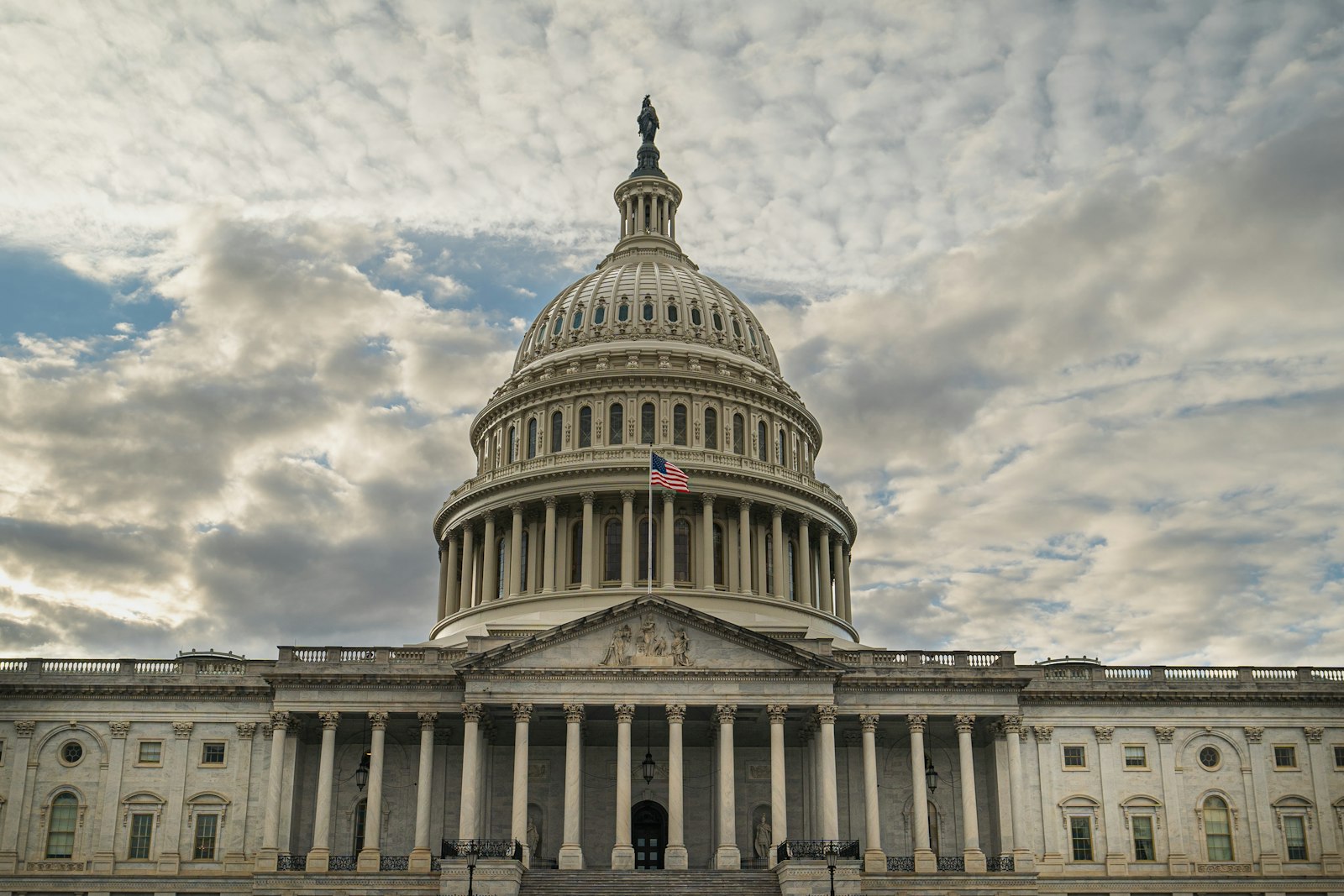
Results as of Wednesday, Nov. 4, 2026. Some races are still being counted.
Tuesday’s midterm elections flipped control of Congress. According to the Associated Press, Democrats won a Senate majority by flipping Republican-held seats in states including Iowa, Maine, Ohio, North Carolina, Kansas and Texas. The AP then called the House for Democrats early Wednesday.
What changed
- Senate: Democrats move into the majority when the new Congress convenes. Republicans held seats in Florida and Wyoming, among others.
- House: Democrats take the majority. Rep. Hakeem Jeffries is in line to become speaker, pending the House’s vote in January.
- Massachusetts: Gov. Maura Healey and Sen. Ed Markey both won new terms.
The calendar from here
- Now through December: States finish counting and certify results. Close House races and ranked-choice states can take longer.
- Lame-duck session: The current Congress stays in session until the new one is seated, so any year-end spending deadlines are still handled by today’s members.
- Jan. 3, 2027: The new Congress is sworn in and the House elects its speaker.
BOSSTOX covers news and updates for Boston Made, Inc. This post is a neutral summary of reported results. It is not investment advice and does not endorse any candidate or party.
Sources: the Associated Press, PBS NewsHour and Forbes live coverage of AP race calls.
Quick check: Who keeps working until the new Congress is seated?
- Nobody. Congress pauses until January.
- The current Congress, in a lame-duck session.
- Only the Senate.
Show answer
B. The current Congress stays in session for the lame-duck period until the new members are sworn in on Jan. 3, 2027.

Earnings Season 101: Beats, Misses and Guidance, Explained With This Week’s Reports

Stocks Soar After the Midterms: What Divided Government Means for Markets

Subsea and Long-Haul Fiber for AI

Election 2026 Recap: Congress Changes Hands

Gas Turbines on Data-Center Campuses

Transformer Lead Times Are Becoming a Data-Center Schedule Risk

GPU Supply Chains: How AI Hardware Gets Made, Moved, and Bottlenecked

Water Use and Dry Coolers: The Tradeoff AI Sites Cannot Avoid
Earnings Season 101: Beats, Misses and Guidance, Explained With This Week’s Reports
Stocks Soar After the Midterms: What Divided Government Means for Markets
Subsea and Long-Haul Fiber for AI
Election 2026 Recap: Congress Changes Hands
-
 Power & Grid3 weeks ago
Gas Turbines on Data-Center Campuses
-
 Power & Grid3 weeks ago
Transformer Lead Times Are Becoming a Data-Center Schedule Risk
-
 Compute & Silicon4 weeks ago
GPU Supply Chains: How AI Hardware Gets Made, Moved, and Bottlenecked
-
 Cooling1 month ago
Water Use and Dry Coolers: The Tradeoff AI Sites Cannot Avoid
-

 Power & Grid3 weeks ago
Battery Storage at AI Sites
-

 Cooling2 weeks ago
Liquid-Cooling Leak Detection and Reliability
-

 Capital & Backlog2 weeks ago
AI Infrastructure’s Rough Week: Chips Fall 6.7% as Meta Lifts Capex Floor
-

 Explainers1 month ago
Explainer: What an AI Inference Stack Actually Does