
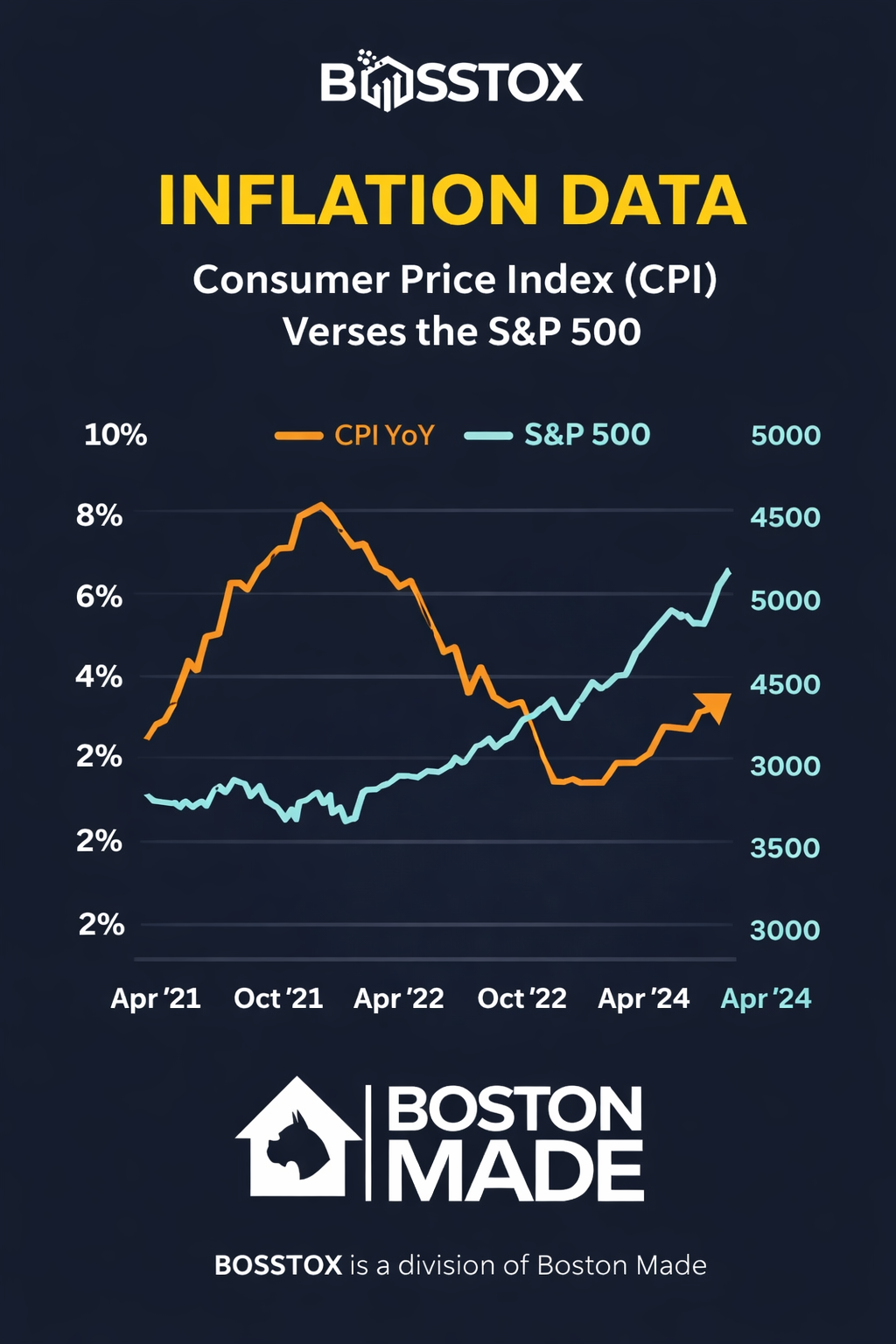
Inflation isn’t just an economic headline — it’s a force that reshapes purchasing power, investment strategy, and long-term wealth. As the Consumer Price Index (CPI) continues to evolve post-pandemic, understanding how inflation interacts with market performance is no longer optional. It’s essential.
At BOSSTOX, a division of Boston Made, we believe clarity creates confidence. That’s why we track CPI alongside the S&P 500 — not as isolated metrics, but as interconnected signals that tell a broader story about economic momentum, risk, and opportunity.
What the CPI Tells Us About Inflation
The Consumer Price Index measures the average change in prices paid by consumers for everyday goods and services — from groceries and rent to energy and transportation. When CPI rises, inflation accelerates. When it cools, purchasing power stabilizes.
Over the past several years, CPI surged to levels not seen in decades, peaking as supply chains tightened, stimulus flooded the economy, and demand rebounded aggressively. While inflation has since moderated, it remains structurally higher than the pre-2020 norm — a reality that continues to influence interest rates, wages, and asset prices.
Inflation isn’t just about higher prices. It’s about currency behavior. When inflation rises, money buys less — forcing investors to seek assets that can outpace that erosion.
The S&P 500: Markets React, Then Adapt
The S&P 500 tells a different — but complementary — story.
As inflation initially spiked, markets struggled. Higher CPI triggered aggressive monetary tightening, pressuring valuations and increasing volatility. But markets are forward-looking. Once inflation showed signs of stabilizing, equities began pricing in future growth, productivity gains, and earnings expansion.
Historically, the S&P 500 has acted as a long-term hedge against inflation — not because stocks are immune to it, but because businesses adapt. Prices adjust, revenues grow, and innovation finds a way forward.
The divergence between CPI and the S&P 500 highlights a critical truth: inflation shocks markets in the short term, but disciplined capital allocation wins over time.
Why This Relationship Matters Now
Understanding CPI versus market performance isn’t about timing trades — it’s about building strategy.
- Inflation impacts cash first — savings lose real value if returns don’t exceed CPI
- Markets reprice risk quickly — volatility often precedes opportunity
- Long-term growth favors assets that scale — innovation, productivity, and earnings matter more than fear
For founders, operators, and forward-thinking investors, this environment demands adaptability. Static strategies fail in dynamic economies.
BOSSTOX Perspective: Data Over Noise
At BOSSTOX, we don’t chase headlines — we analyze systems.
Inflation data helps us understand the cost of capital. Market data helps us understand sentiment and growth expectations. When viewed together, CPI and the S&P 500 provide a powerful lens into where the economy has been — and where it’s likely going next.
This is especially important as Boston Made builds toward its long-term vision. Sustainable growth isn’t built on speculation. It’s built on measured risk, informed decision-making, and economic literacy.
The Bottom Line
Inflation changes the rules — but it doesn’t end the game.
Those who understand how CPI influences markets are better equipped to protect value, deploy capital intelligently, and build resilient strategies in uncertain times. Whether you’re an investor, entrepreneur, or operator, the lesson is the same:
Data beats emotion. Strategy beats reaction.
And in an inflationary world, understanding the relationship between prices and markets isn’t just smart — it’s necessary.
BOSSTOX is a division of Boston Made.
For more insights on markets, inflation, and long-term economic strategy, visit bosstox.com.
Leave a Reply