
Networking
Fiber Repair Slack Is Part of the Restoration Plan
Fiber routes are often described by where they run and how much traffic they can carry. Restoration also depends on physical access, repair arrangements and usable spare length. A route map alone does not describe how a damaged section returns to service.

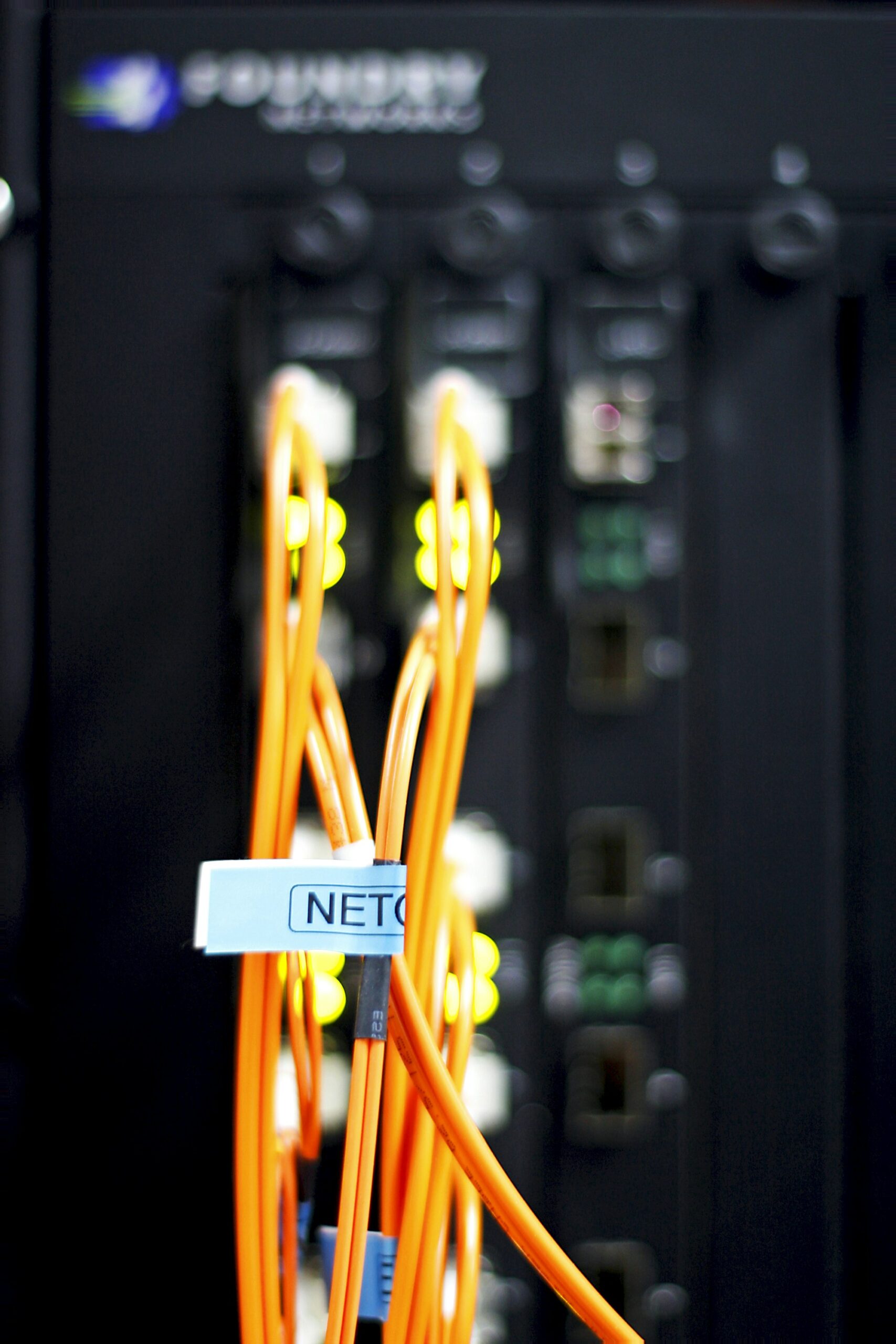
Photo: Patrick Turner / Unsplash
Fiber routes are often described by where they run and how much traffic they can carry. Restoration also depends on physical access, repair arrangements and usable spare length. A route map alone does not describe how a damaged section returns to service.
The operating distinction
A repair may require locating the fault, reaching the work area and joining intact fiber. Conditions differ along buried routes, building entrances and shared infrastructure. Spare materials and documented ownership help, but they need to fit the actual route and the authority to work on it.
Repair planning should identify the boundary between the cable owner and the service provider. The organization selling the connection may coordinate work performed by another party. That arrangement can work well, but its responsibilities need to be understood before an incident.
A practical example
Picture a hypothetical damaged cable beneath a busy road. A crew and replacement materials may be ready while access approval controls the schedule. A different fault in an accessible equipment room presents another restoration problem, even if both interrupt the same amount of traffic.
Questions worth asking
Restoration depends on the condition of the route and the organizations responsible for it. A dispatch promise is useful context, but access, materials and acceptance can determine when the connection actually becomes usable again.
- Who controls access to the likely repair locations along the route?
- Are restoration materials and responsible crews identified for this cable system?
- What service remains available while the physical repair is underway?
What the evidence supports
Readers should avoid turning a supplier's general repair target into a guarantee for every incident. The practical question is what the agreement covers, what the route requires and which dependencies can extend the work. Alternate service should be assessed separately from repair speed.
The restoration discussion should also explain how a repaired path is accepted back into service. Physical work finishing at the fault location is not necessarily the final service check. A clear account connects the repair record to the customer's observed result and states whether temporary routing remains in use. This separates progress on the physical asset from confirmation that the intended end-to-end connection has returned to normal operation.
The repair story runs from fault detection through access and materials to verified restoration, not just dispatch.
Quick check
How much did you catch? Tap a question to see the answer.
1. What practical steps and permissions can affect a fiber repair?
Answer: A repair may require locating the fault, reaching the work area and joining intact fiber. Conditions differ along buried routes, building entrances and shared infrastructure. Spare materials and documented ownership help, but they need to fit the actual route and the authority to work on it.
2. Why should the cable owner and service provider be distinguished?
Answer: Repair planning should identify the boundary between the cable owner and the service provider. The organization selling the connection may coordinate work performed by another party. That arrangement can work well, but its responsibilities need to be understood before an incident.
3. What may control repair timing beneath the hypothetical busy road?
Answer: Picture a hypothetical damaged cable beneath a busy road. A crew and replacement materials may be ready while access approval controls the schedule. A different fault in an accessible equipment room presents another restoration problem, even if both interrupt the same amount of traffic.
Why Slack Length Matters in a Repair
When a fiber cable is cut, the damaged section usually has to be removed and the remaining ends joined, either directly or with a new section of cable and additional splices. That work needs enough spare length near the damage to bring the ends into a splice enclosure and work on them properly. Operators often store loops of extra cable at intervals along a route for this purpose. If the stored slack is too far from the damage, has already been used in an earlier repair or was never installed, the crew may need to place a longer replacement section, which adds splices and time.
Slack can also be consumed quietly over the years. Each repair, relocation or road project may draw on the stored length. Unless the records are updated, the plan may assume material that is no longer there.
A Restoration Readiness Review
- Identify likely fault locations. Consider road crossings, construction corridors, building entrances and shared structures.
- Confirm slack and material records. Ask whether stored slack and spare cable have been verified and updated after recent work.
- Clarify ownership. Establish who owns each cable segment and who is authorized to perform repairs on it.
- Understand access conditions. Identify where permits, traffic control or property access approvals may be needed.
- Define temporary service. Describe what alternate routing exists while the physical repair is underway.
- Agree on acceptance. State how the repaired path will be tested end to end and returned from temporary routing.
Common mistakes
One mistake is treating dispatch time as restoration time, when locating the fault, gaining access and splicing can each take longer than reaching the site. Another is assuming that the service provider owns the cable when it may lease it from someone else. A third is leaving traffic on temporary routing indefinitely after repair, which can reduce diversity without anyone noticing.
What This Means for Businesses That Depend on Connectivity
For an organization relying on a particular route, understanding restoration helps set realistic expectations. A provider able to describe its repair arrangements, ownership boundaries and temporary routing is giving a fuller picture than a single response target. For readers following network infrastructure, repair capability is one of the practical, less visible factors that shapes how long an interruption actually lasts.
A route is resilient partly because of where it runs, and partly because of how quickly it can be put back together.
Questions Readers Ask
How is a fiber fault located?
Technicians commonly use test equipment that sends light down the fiber and measures reflections to estimate the distance to the break, then confirm the location in the field.
Can a repair be faster than finding the fault?
Sometimes the splicing work is quicker than locating the damage and gaining access, especially on buried routes.
Should customers ask about slack?
They can reasonably ask how the provider plans repairs on critical routes, even if detailed records remain confidential.
AI infrastructure explainers and news on iPhone, iPad and Apple Watch.
Latest stories
View all


Networking
The Control Plane Can Be a Shared Dependency Across Separate Systems
Two independent-looking systems can still rely on one service to decide what they should do. Configuration management, identity, name resolution and orchestration can become common dependencies even when the data paths are physically separate.
Photo: Scott Rodgerson / Unsplash
Two independent-looking systems can still rely on one service to decide what they should do. Configuration management, identity, name resolution and orchestration can become common dependencies even when the data paths are physically separate.
The operating distinction
The data plane moves the work, while control functions establish or manage its behavior. Some equipment continues operating through a temporary control interruption; other actions may fail until control returns. The distinction matters because successful ongoing traffic does not necessarily prove that new sessions or changes will work.
Management dependencies can extend beyond the network team. Identity services and access systems may be owned by another group, while the people restoring equipment assume those services are available. That creates an organizational boundary as well as a technical one.
A practical example
Picture a hypothetical network that keeps existing connections running while its management service is unavailable. Monitoring may report that traffic is flowing, yet a new deployment cannot receive the configuration it needs. Both observations can be true at the same time.
Questions worth asking
Duplicated data links do not explain the availability of the services that configure them. Identifying control dependencies helps distinguish uninterrupted traffic from the broader ability to manage, replace and restart equipment after a fault.
- Which functions keep working when the shared control service is unavailable?
- Can new sessions and replacement devices be brought into service?
- How is access to the management system restored during a broader incident?
What the evidence supports
A shared control service is not automatically an unacceptable design. Centralization can simplify management. The task is to identify what depends on it, how interruption affects different operations and how restoration is tested. A diagram should show management dependencies as well as the visible cables.
A useful tabletop discussion asks what can be observed, changed and recovered if the common management service is absent. The answer should distinguish a service that can continue automatically from one that needs human intervention or new configuration. It can then identify the approved route for that intervention. This provides a better picture of recovery capability than a diagram that shows duplicated data links but omits who or what controls them.
Separate the ability to keep current work moving from the ability to manage or restart it.
Quick check
How much did you catch? Tap a question to see the answer.
1. How can separate systems share a dependency?
Answer: Through control functions like identity, configuration management, name resolution or orchestration.
2. Does flowing traffic prove new changes will work?
Answer: No. Existing connections can run while new sessions or deployments fail.
3. Why is this an organizational issue too?
Answer: Identity and access services may belong to another team.
A Map of Common Control Dependencies
Control dependencies are often invisible on a physical diagram because they do not occupy their own cables. Listing them explicitly is a useful first step. In many environments, the shared services include:
- Identity and authentication. The systems that confirm who an engineer or automated process is and what they are allowed to change.
- Name resolution. The services that translate names into addresses for both applications and management tools.
- Configuration management. The repositories and tools that hold intended device settings and push them out.
- Orchestration and scheduling. The systems that decide where workloads run and start or stop them.
- Certificates and secrets. The services that issue and renew the credentials systems use to trust each other.
- Time synchronization. Accurate time underpins logging, certificate validity and coordination.
- Out-of-band management. The separate access path engineers use when the main network is unavailable.
Running a Control-Plane Tabletop Exercise
A tabletop exercise lets a team walk through a scenario without touching live systems. A simple structure works well.
- Pick one shared service. Assume it is unavailable for a defined period.
- List what keeps running. Identify functions expected to continue automatically, such as existing traffic flows.
- List what stops. Identify actions that would fail, such as new deployments, logins, configuration pushes or device replacements.
- Trace the recovery route. Determine how engineers would reach the affected systems, and whether that route itself depends on the missing service.
- Check emergency access. Confirm that break-glass credentials or local access methods exist, are controlled and have been tested.
- Record corrections. Capture missing documentation, unclear ownership or circular dependencies discovered during the walk-through.
Common mistakes
A frequent discovery is a circular dependency, where the tool needed to restore a service relies on that same service. Another is an out-of-band network that quietly shares authentication or name resolution with the main environment. A third is assuming that the identity team will be available and informed during an infrastructure incident, when no joint procedure exists. Finally, emergency credentials are sometimes created and never tested, so nobody knows whether they still work.
What This Means for Businesses and Readers
For organizations using cloud and hosted services, control-plane dependencies help explain why an outage can affect services that appear unrelated. A disruption in a shared management or identity function can prevent changes and new connections across many systems while existing work continues. For readers trying to understand an incident report, distinguishing between data-plane and control-plane effects often clarifies what customers actually experienced.
Separate cables can carry the work. Something still has to tell them what to do.
This is general education about system design. It does not assess any particular provider’s architecture.
Questions Readers Ask
Is centralizing control a mistake?
Not necessarily. Centralized management can improve consistency and security. The important part is understanding and testing what depends on it.
What is the difference between the data plane and the control plane?
The data plane carries the actual traffic or work. The control plane decides how that traffic is routed, configured and managed.
Why might existing connections survive while new ones fail?
Established sessions may already have the information they need, while new sessions require lookups, authentication or configuration from the unavailable service.
What is break-glass access?
A tightly controlled emergency method of reaching systems when normal access paths are unavailable, used under defined conditions and recorded.
How often should control dependencies be reviewed?
Whenever a shared service is introduced, replaced or reorganized, and periodically in between, because new dependencies tend to accumulate quietly as tools and teams change over time.
AI infrastructure explainers and news on iPhone, iPad and Apple Watch.
Networking
Two Fiber Contracts Can Still Share One Excavation Risk
Buying connections from different suppliers does not establish that the physical routes are independent. Somewhere beyond the facility fence, those services may pass through the same duct, bridge or building entrance, creating a common exposure.
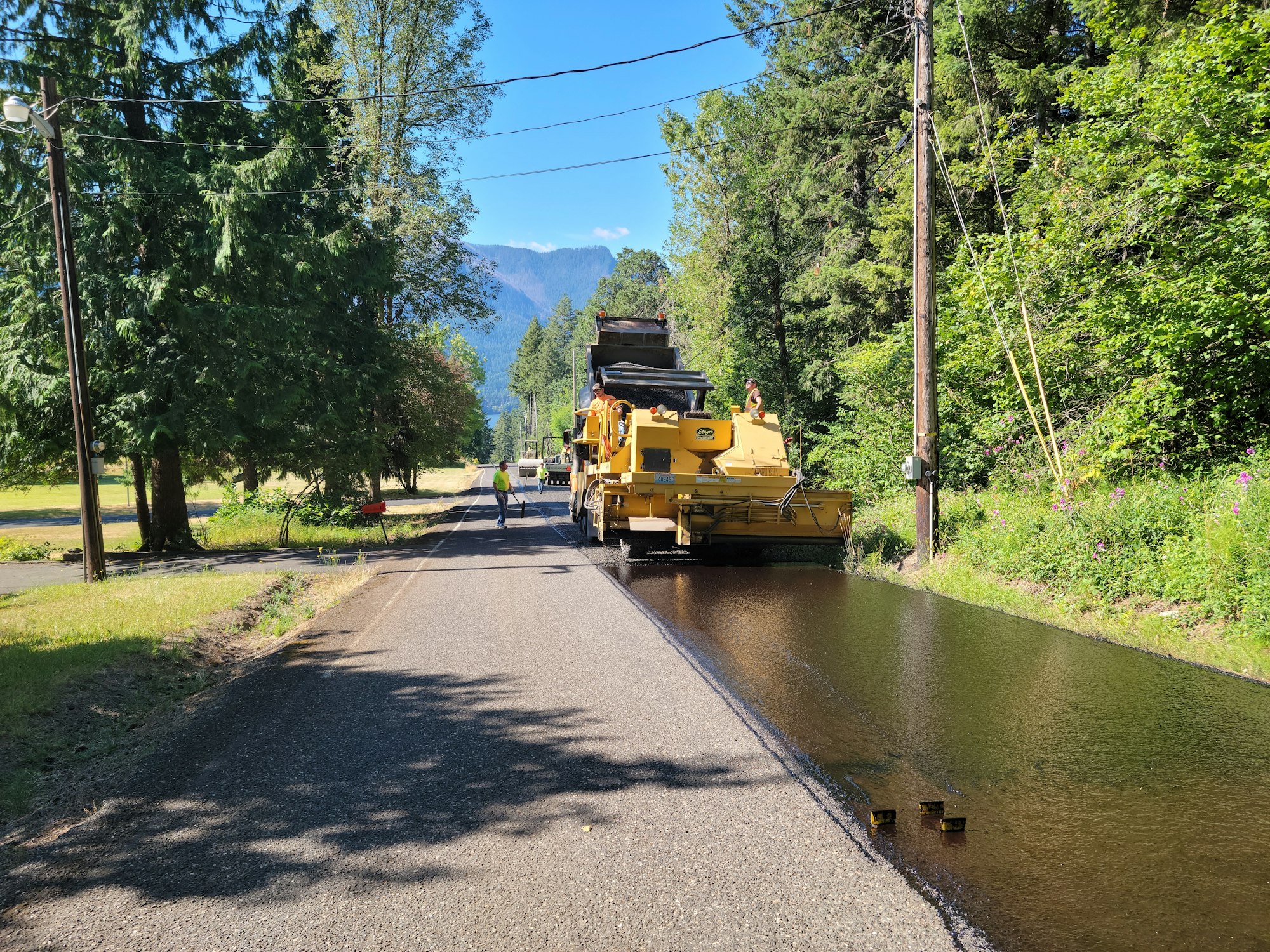
Photo: Tom Shamberger / Unsplash
Buying connections from different suppliers does not establish that the physical routes are independent. Somewhere beyond the facility fence, those services may pass through the same duct, bridge or building entrance, creating a common exposure.
The operating distinction
Network service is a chain of physical assets and operational arrangements. Separate billing relationships can sit on shared infrastructure. Route diversity therefore asks where the cables actually travel and which crossings, access points and equipment rooms they share. Logical paths alone cannot answer every physical question.
The same reasoning applies to restoration plans. An alternate service that survives one local cable fault may still be affected by a wider event. Naming the scenario avoids an all-or-nothing conversation about whether a network is diverse.
A practical example
Imagine two connections that enter a campus from opposite sides but meet at the same nearby road crossing. A fault at that crossing could affect both services. The separate entrances remain useful, but they do not remove that shared section of the route.
Questions worth asking
Different contracts can provide useful commercial options without proving physical independence. Reading the route evidence separately helps identify the actual benefit of the arrangement and the remaining shared exposure that needs another response.
- Which physical segments are shared outside the property boundary?
- When was the route information last confirmed with the providers?
- What restoration options remain if that common segment is unavailable?
What the evidence supports
Route documentation can be incomplete or subject to confidentiality limits. It can also become stale after changes. The practical goal is to establish the important shared risks and the evidence available, rather than assume that a second contract eliminates every possible network interruption.
A route sketch should distinguish confirmed information from an assumption or a supplier statement awaiting clarification. It can then show the important uncertainty without revealing sensitive route details publicly. The point is to make procurement and operating discussions more precise: which kind of damage is covered, which common dependencies remain and what evidence would justify a stronger claim. That is more useful than assuming that different service names imply different physical journeys.
Diversity is a property of the complete path, not simply the number of names on the invoices.
Quick check
How much did you catch? Tap a question to see the answer.
1. Do two suppliers guarantee independent routes?
Answer: No. They may share a duct, bridge or building entrance.
2. What does route diversity ask?
Answer: Where the cables physically travel and which crossings they share.
3. What could two entrances on opposite sides still share?
Answer: The same nearby road crossing.
How Shared Segments Usually Hide
Common exposure rarely announces itself on a contract. It tends to sit in places that are easy to overlook because they are outside the property and outside the day-to-day attention of the facility team.
- Shared conduit or duct banks. Different providers may lease space in the same underground structure along a road.
- Bridge and rail crossings. Physical geography often funnels routes toward a small number of practical crossing points over rivers, highways or rail lines.
- Common meet points. Carriers can hand traffic off in the same nearby building or cabinet before it reaches the facility.
- Resold or leased capacity. One supplier may carry traffic over another supplier’s fiber, so two names on two invoices can describe one physical cable.
- The same building entrance. Even when routes are separate for miles, they may converge on a single entrance room or cable vault.
A Practical Route Review, Step by Step
Facility teams and buyers can approach route diversity as a structured review rather than a yes-or-no question.
- Request route information from each provider. Ask for the level of detail they are able to share, recognizing that some route data is confidential.
- Mark known convergence points. Identify crossings, meet points, entrances and any segments where the routes appear to run near each other.
- Label the quality of each claim. Separate confirmed information from provider statements awaiting verification and from assumptions.
- Name the scenarios. Consider a single cable cut near the site, construction damage along a shared road, a bridge closure and a problem in a shared equipment room.
- Map restoration options to each scenario. Decide which services would remain available and which would require a separate response.
- Set a refresh date. Routes change when providers reroute, rebuild or sell assets. Agree on how often the information will be confirmed again.
Common mistakes
One mistake is accepting a provider’s diversity label without asking what it covers. Another is checking diversity once at contract signing and never again. A third is focusing entirely on the long-haul portion of a route while ignoring the last stretch near the facility, where excavation work is often most likely to occur. A fourth is assuming that a wireless or alternate technology backup has no shared dependency, when it may rely on the same power, building or tower infrastructure.
What This Means for Businesses Relying on Connectivity
For organizations that depend on a data center or cloud region, network diversity is part of the resilience they are buying, whether or not they negotiate it directly. A provider that can explain its known shared exposures clearly is usually giving a more honest picture than one that simply states its routes are diverse. For readers following infrastructure companies, route quality is one of the less visible factors behind service reliability, and it rarely appears in a headline.
The most useful diversity statement describes which failures the arrangement is expected to survive and which it is not.
Questions Readers Ask
Why do providers keep route details confidential?
Detailed route maps can create security concerns and may be commercially sensitive. Buyers can often obtain enough information to assess shared risk under appropriate agreements.
Is physical diversity always worth the cost?
It depends on how much an interruption would cost the business and which scenarios matter most. The decision benefits from naming the risk rather than buying diversity as a general label.
Can two routes ever be fully independent?
Complete independence is difficult to prove. The practical aim is to reduce the most likely and most damaging shared exposures and to know which ones remain.
How does excavation risk relate to fiber?
Buried cable can be damaged during digging for roads, utilities or construction. Shared corridors mean one digging accident can affect more than one service.
AI infrastructure explainers and news on iPhone, iPad and Apple Watch.
Networking
InfiniBand vs. Ethernet for AI Clusters
InfiniBand offers a tightly integrated path for synchronized AI traffic, while Ethernet offers broader compatibility and choice; the right fabric depends on workload, scale, software, and operating priorities.

The networking choice inside an AI cluster is not a simple bandwidth comparison. Training jobs repeatedly move parameters, gradients, and activations between accelerators. If the network stalls, expensive GPUs wait. The result can be lower utilization even when every link’s headline speed looks impressive.
InfiniBand and Ethernet can both build large clusters. They differ in how much of the transport, congestion control, topology, and software stack is standardized or integrated for the target workload.
Why AI traffic is unusual
AI training produces synchronized bursts. Many accelerators finish a step and communicate at nearly the same time. That creates a traffic pattern that is sensitive to tail latency, congestion, packet loss, and collective-operation performance.
A general enterprise network can tolerate variable paths and occasional retransmission. A large training cluster may lose efficiency if a small number of links become hot and delay an all-reduce operation. The network is part of the compute system, not just plumbing.
InfiniBand’s case
InfiniBand was designed for high-performance computing. It supports low-latency communication, remote direct memory access, and features intended to keep data moving between nodes with limited CPU intervention.
NVIDIA’s April 2025 description of a DGX SuperPOD deployment cited Quantum-2 InfiniBand networking and a digital-twin validation process. The company said a SoftBank deployment of 510 DGX B200 systems was completed in three weeks, compared with a typical six-plus months, and that NVIDIA estimated the avoided downtime at roughly $1 million per day for a 1,000-server, 8,000-GPU data center. That estimate is NVIDIA’s analysis, not an independent industry average, but it illustrates why network deployment speed can have financial value.
InfiniBand’s strength is a validated stack. Hardware, drivers, collective libraries, and topology can be designed together. That can reduce the integration burden for a customer that wants a high-performing training appliance.
Its weaknesses are ecosystem and flexibility. It can require specialized adapters, switches, expertise, and operational tools. A company with a large Ethernet organization may prefer a fabric it already knows.
Ethernet’s case
Ethernet is widely deployed across data centers and connects servers, storage, offices, and the public network. It offers a large supplier base, familiar management tools, and multiple implementation choices.
AI Ethernet systems commonly use lossless or low-loss designs, remote direct memory access over Converged Ethernet, explicit congestion notification, and careful buffer and topology planning. The performance depends heavily on configuration. “Ethernet” by itself does not say whether a cluster will perform well.
Intel’s Gaudi 3 materials emphasize standard Ethernet and a 32-node all-Ethernet reference design. The pitch is not merely lower equipment cost. It is the ability to use existing operational skills and to avoid a completely closed networking path.
Speed changes the economics
Arista announced new 800G platforms in October 2025 and said 800GbE port shipments more than tripled sequentially in the second quarter of 2025, according to cited market research. The company described 3.2-terabit-per-second HyperPorts and AI uses including lossless training and inference.
800G matters because an AI rack can have many high-bandwidth links. If each accelerator needs 800 gigabits per second of east-west bandwidth, a 72-accelerator rack creates enormous switching demand. Moving to 1.6T transceivers can reduce port counts or support larger bisection bandwidth, but it also raises optical, thermal, and signal-integrity requirements.
The comparison should be made at job completion time
A network that delivers higher link speed but poor congestion behavior may lose to a slower network with better collective performance. The useful test is end-to-end: time to train, tokens per second, scaling efficiency from one node to 32 or 128 nodes, tail latency, and behavior during failures.
The test should include the actual model, precision, batch size, topology, and software release. A vendor’s ideal benchmark can be informative, but it is not a deployment guarantee.
Operations may decide the outcome
A cluster can fail financially through poor utilization. If the team cannot troubleshoot the fabric, the expensive accelerators sit idle. A familiar Ethernet operation may be worth more than a theoretical performance advantage. Conversely, a dedicated AI service with a specialized team may benefit from the tighter InfiniBand stack.
A hybrid architecture is common. InfiniBand or specialized Ethernet can carry accelerator-to-accelerator traffic, while ordinary Ethernet handles management, storage, and user access. The boundary must be clear so a failure in one network does not quietly degrade the other.
The decision rule
Choose InfiniBand when predictable scale-out training, validated deployment, and low-latency collectives dominate. Choose Ethernet when supplier choice, operational familiarity, interoperability, and mixed workloads matter more. Measure both on the workload that pays the bills.
The procurement decision should include the people who will operate the fabric. Ask how many engineers are trained on the selected switches, how firmware is qualified, how telemetry is exported, and how a bad optic is isolated. Also ask whether the vendor can support a mixed-generation cluster during a refresh. A network that is technically fast but difficult to diagnose can reduce accelerator utilization for weeks. In that sense, operational simplicity is a performance feature, not an administrative preference.
At very large scale, fabric choice also affects the power budget. More ports, higher-speed optics, and additional switch tiers consume electricity and occupy rack space. That overhead should be included in the same total-cost model as accelerator power. A lower-cost accelerator that needs a larger network may not be cheaper at the cluster level. The fair comparison is the amount of useful work delivered by the complete system after networking, cooling, software, and operations are included.
Sources
- NVIDIA, “NVIDIA Helps Build AI Factories Faster Than Ever with DGX SuperPOD,” April 11, 2025: developer.nvidia.com
- NVIDIA, “Blackwell: Born for Extreme-Scale AI Inference,” 2025: blogs.nvidia.com
- Intel, “Intel Gaudi AI Accelerator Products,” accessed October 2026: intel.com
- Arista, “Arista Networks Unveils Next Generation Data and AI Centers,” October 29, 2025: arista.com
- NVIDIA, “Reference Architectures: Deep Dive,” accessed October 2026: docs.nvidia.com
BOSSTOX Research articles are drafted with AI assistance and reviewed by our editors before publication. See our editorial standards.

Who Pays for AI’s Electricity? The Data Center Fight Reaches the Senate

Fiber Repair Slack Is Part of the Restoration Plan

First Response and Full Completion Are Different Inference Questions

Four Different Capacity Numbers Can Describe the Same Hall

Transformer Lead Times Are Becoming a Data-Center Schedule Risk

Gas Turbines on Data-Center Campuses

Water Use and Dry Coolers: The Tradeoff AI Sites Cannot Avoid

FERC’s Large-Load Orders: The November 16 Grid Deadline Behind the AI Build-Out
Who Pays for AI’s Electricity? The Data Center Fight Reaches the Senate
Fiber Repair Slack Is Part of the Restoration Plan
First Response and Full Completion Are Different Inference Questions
Four Different Capacity Numbers Can Describe the Same Hall
-
 Power & Grid1 month ago
Transformer Lead Times Are Becoming a Data-Center Schedule Risk
-
 Power & Grid1 month ago
Gas Turbines on Data-Center Campuses
-
 Cooling2 months ago
Water Use and Dry Coolers: The Tradeoff AI Sites Cannot Avoid
-
 Power & Grid1 month ago
FERC’s Large-Load Orders: The November 16 Grid Deadline Behind the AI Build-Out
-

 Compute & Silicon2 months ago
GPU Supply Chains: How AI Hardware Gets Made, Moved, and Bottlenecked
-

 Power & Grid1 month ago
Battery Storage at AI Sites
-

 Capital & Backlog4 weeks ago
AI Infrastructure’s Rough Week: Chips Fall 6.7% as Meta Lifts Capex Floor
-

 Cooling1 month ago
Liquid-Cooling Leak Detection and Reliability