
Capacity & Sites
A Powered Phase Is Not the Same as a Finished Campus
A campus can be large on a plan while only part of it is ready for equipment. Describing capacity accurately means separating land, buildings, energized systems and space that has actually passed the required operational checks.

Photo: Artem Labunsky / Unsplash
A campus can be large on a plan while only part of it is ready for equipment. Describing capacity accurately means separating land, buildings, energized systems and space that has actually passed the required operational checks.
The operating distinction
Development proceeds through dependencies. A building shell may be complete before power equipment is available. A powered hall may still need cooling validation or customer fit-out. Later phases can depend on work that has not begun. Combining those stages into one number hides the practical delivery question.
The distinction also changes how readers interpret a ribbon-cutting announcement or construction photograph. A completed exterior shows progress, but it cannot establish the state of the systems inside. The story needs the operational milestone behind the image.
A practical example
Consider a hypothetical site with one operating hall and several planned additions. The available service today belongs to the operating portion. Future expansion may be credible and valuable, but it remains subject to its own infrastructure, permissions, construction and handover milestones.
Questions worth asking
A delivery claim should name the condition that makes a phase useful. Visible construction progress, equipment arrival and operational acceptance each contribute evidence, but none should silently take the place of the others.
- Which portion is energized and able to support its stated load?
- What acceptance work remains before a customer can use it?
- Which later phases depend on additional off-site infrastructure?
What the evidence supports
A phase label is useful only when its meaning is stated. Terms such as ready, commissioned and delivered can refer to different contractual or technical boundaries. A careful account names the boundary and avoids treating a future milestone as an accomplished fact.
A phased table can record the handover boundary, the remaining dependency and the date of the latest update for each area. When a phase advances, it moves into the appropriate category instead of appearing in both the planned and delivered totals. That preserves a coherent account over time and lets the reader understand real progress without pretending that every part of a developing campus reaches readiness together.
Keep operating capacity, near-term delivery and longer-term plans in separate columns before combining the story.
Quick check
How much did you catch? Tap a question to see the answer.
1. What should accurate capacity descriptions separate?
Answer: Land, buildings, energized systems and space that has passed operational checks.
2. What can’t a completed exterior photo establish?
Answer: The state of the systems inside.
3. Which part of a phased site offers service today?
Answer: Only the operating portion.
A Vocabulary for Phase Status
Much confusion about campus capacity comes from words that sound precise but carry different meanings in different contexts. Agreeing on a working vocabulary before reading an announcement helps keep the stages distinct. The following terms are a general guide, not a contractual standard, and any particular agreement may define them differently.
- Planned. The phase exists in a development concept or permit application. Land, power and equipment may not yet be secured.
- Under construction. Physical work has started, but the building systems are not yet able to support customer load.
- Energized. Power is available to the phase. This alone does not confirm that cooling, controls and protection systems have been validated.
- Commissioned. Systems have been tested against defined criteria. The scope of that testing matters and should be stated.
- Handed over. Responsibility has passed from the construction party to the operator or customer under a defined boundary.
- In service. Customer equipment is installed and running within the phase.
Reading a Capacity Announcement Step by Step
When a developer or operator describes a campus, a reader can work through the claim in a consistent order.
- Find the unit. Determine whether the figure refers to land area, building area, utility power, power available for equipment or something else.
- Find the stage. Identify which portion of the figure is in service today and which is planned or under construction.
- Find the dependencies. Look for references to utility upgrades, substations, transmission work, permits or equipment deliveries that later phases rely on.
- Find the date. Note when the status was last updated, since construction moves and older statements can linger in later coverage.
- Find the boundary. Ask what event moves a phase from one category to the next and who confirms it.
Common mistakes
The most common error is adding planned and operating capacity together and quoting the total as if it existed today. Another is treating a groundbreaking or topping-out ceremony as a delivery milestone. A third is assuming every phase will follow the same timeline as the first, when later phases may depend on infrastructure that is not yet secured. Each of these makes the campus look further along than the evidence supports.
What This Means for Readers Following the Industry
Large campus figures are often used to describe ambition and long-term potential, which can be entirely legitimate. The useful habit is to keep three separate pictures in mind: what is operating now, what is near delivery with its remaining dependencies, and what is a longer-term plan. Each picture carries a different level of certainty. A reader who keeps them apart can follow progress over successive updates and notice when a phase genuinely advances or when a timeline shifts.
A campus is delivered in parts, and each part earns its status separately.
This is general education about interpreting infrastructure announcements. It is not a view on any company, and readers making financial decisions should speak with a qualified financial professional.
Questions Readers Ask
Why would a developer announce the full campus size early?
Early announcements can support permitting, utility planning, financing and customer discussions. The full size describes intent, while delivery happens in stages.
Does an energized building mean customers can move in?
Not by itself. Cooling, controls, fire protection and fit-out may still need to be completed and accepted.
What usually limits later phases?
Often utility power, equipment supply, permits and construction capacity. The specific constraint varies by site.
How can a reader track progress over time?
By noting the status of each phase in successive updates and watching for phases that move between categories, rather than relying on the headline total.
AI infrastructure explainers and news on iPhone, iPad and Apple Watch.
Latest stories
View all


Capacity & Sites
A Power Station Becomes an AI Campus: Inside the $27 Billion Drax Plan
Drax, Brookfield and Radiant want to build more than a gigawatt of AI data center capacity at a North Yorkshire power station. Here is what is real, what is planned, and why power sites are suddenly prized.
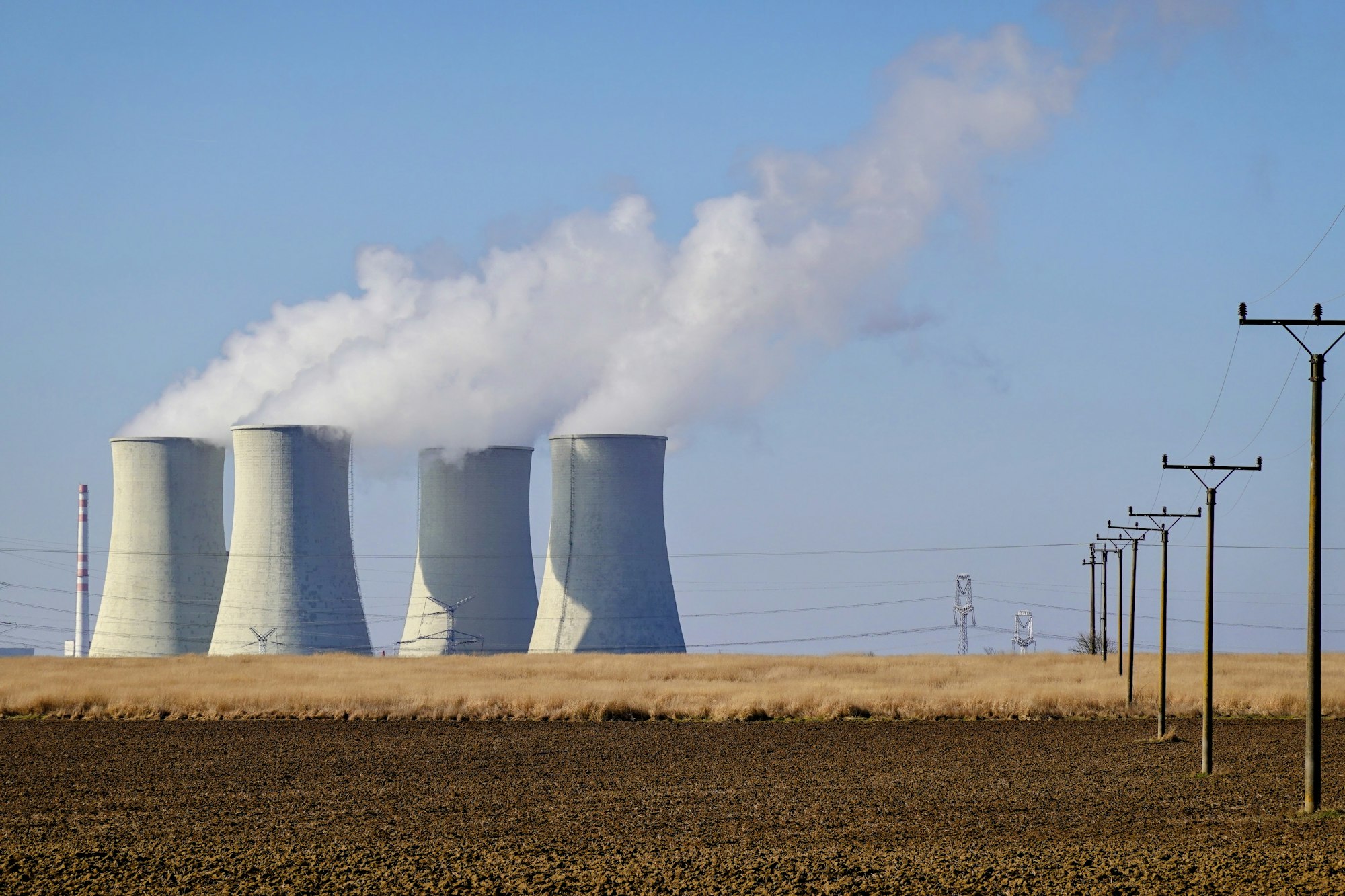
Drax shares jumped more than 8% on Tuesday after the British power company said it is teaming up with Brookfield and AI infrastructure platform Radiant to develop a data center campus at Drax Power Station in North Yorkshire, according to CNBC and Investing.com. The partners say the project could attract more than £20 billion, about $27 billion, of investment and grow beyond one gigawatt of capacity.
Who brings what
- Drax: the land, the power and grid access through the station’s existing 4-gigawatt connection.
- Brookfield: capital, through a joint venture with Qatar’s Qai.
- Radiant: AI infrastructure expertise.
The plan, phase by phase
The project is planned in three phases. The first targets up to 100 megawatts, with commercial operations aimed for early 2028 and an estimated initial investment of £2.5 billion. That first phase still needs planning, regulatory and network approvals, and the partners have not yet made a final investment decision.
Why this matters
As we have covered in our power explainers, the hardest part of building AI capacity is often the grid connection, not the chips. A site that already has a very large connection and a power plant on it skips one of the longest waits in the industry. That is why existing power stations are becoming some of the most sought-after real estate in the AI build-out.
The caution
Analysts were split. JPMorgan said the deal could lift how investors value Drax’s data center ambitions. Citi noted that very little financial detail has been released and that the announcement reads more like a memorandum of understanding than a firm contract. Big headline numbers on day one are not the same as concrete poured.
BOSSTOX publishes educational content, not investment advice.
Quick check
How much did you catch? Tap a question to see the answer.
1. What does Drax contribute to the project?
Answer: The land, the power and grid access through its 4-gigawatt connection.
2. How large is the first phase, and when could it start operating?
Answer: Up to 100 megawatts, targeting early 2028.
3. Why did Citi urge caution?
Answer: Little financial detail was released and no final investment decision has been made, so it reads more like an MOU than a contract.
Going Deeper: Reading a Headline Number Like This One
Figures such as “could attract more than £20 billion” and “beyond one gigawatt” describe a long-term ambition across several phases, not money committed on announcement day. As of early November 2026, a few habits help put a campus announcement of this kind in context.
- Separate the phases. The first phase, up to 100 megawatts, is a small fraction of the full ambition. Later phases depend on demand, approvals and financing that have not yet been arranged.
- Note the word “could.” Investment that “could” be attracted is a projection by the partners. It is not a contract or a final investment decision.
- Look for the decision points. Planning permission, regulatory approvals, network approvals and a final investment decision are each separate milestones. Each one is a moment when the project’s shape can change.
- Watch how capacity is measured. A connection’s size and the power a campus actually draws are different things. Grid capacity at a site may also be shared with existing uses.
Why Power Stations Appeal to Data Center Developers
Earlier BOSSTOX explainers on interconnection queues and brownfield sites describe why existing power infrastructure is so valuable. A large station typically sits beside high-voltage transmission built to export a great deal of electricity. Reusing that connection can, in principle, avoid some of the longest waits in the development process. Such sites also tend to offer large parcels of industrial land and established access routes.
That does not mean the conversion is simple. Even with an existing connection, grid operators and regulators generally need to study how a large new load would interact with the system, especially if generation on the site and demand from a campus are expected to coexist. The original article notes that network approvals are still required for the first phase.
How the partner structure divides roles
The roles described above follow a common pattern in infrastructure deals: one party brings the site and its power, another brings capital and a third brings operating or technical expertise. Each typically shares in the returns in proportion to what it contributes and the risks it takes. Until definitive agreements are published, the exact split of costs, ownership and returns is unknown, which is part of why some analysts urged caution.
What to Watch From Here
- Definitive agreements. Whether the partners move from an announced collaboration to binding contracts with disclosed terms.
- Planning and regulatory filings. Applications to local and national authorities often contain detail on power use, cooling, water and construction schedules.
- Grid approvals. Progress on the network permissions needed for the first phase.
- Tenant commitments. Whether a customer signs on to use the capacity, which would strengthen the case for financing.
- Final investment decision. The point at which the partners commit to building, and the clearest signal that the first phase is moving forward.
- Timeline updates. Any change to the early 2028 target for commercial operations.
Questions Readers Ask
What is a memorandum of understanding? It is a document in which parties outline their intention to work together. It is usually not a binding commitment to complete a deal, which is why it differs from a firm contract.
Why would a share price jump on a non-binding announcement? Prices reflect expectations. Investors may see added value in the site’s potential even before details are final, though expectations can shift as more information emerges.
Why do analysts disagree on the same announcement? They weigh different things. One may focus on the strategic value of the site’s connection and the quality of the partners, while another focuses on the absence of financial terms and binding commitments. Both views can be reasonable at the same time, and later disclosures usually narrow the gap.
Does a 100-megawatt first phase mean the project is small? It is modest compared with the full ambition, but phasing is standard for large campuses, as earlier BOSSTOX coverage explains. Each phase is typically tied to power availability and demand.
Markets, power and the companies building AI infrastructure, on iPhone, iPad and Apple Watch.
Capacity & Sites
AI Server Rack Power Density, 2024-2027
AI rack power is rising from a facilities issue into a site-selection constraint, and the useful question is not the average rack density but how many high-density racks a building can support at once.
Power density is the amount of electrical load assigned to a rack or a room. It matters because almost all of that electricity becomes heat. A building designed for 10 kW racks can be operationally overwhelmed by a small number of 80 kW or 100 kW AI racks even if the campus average still looks moderate.
The 2024-to-2027 period is important because AI systems are shifting from individual accelerator cards toward integrated rack-scale systems. The rack is becoming a unit of deployment, power distribution, cooling, networking, and service.
The density curve is not uniform
A conventional enterprise rack may operate below 10 kW. A virtualized cloud rack may run in the 10-to-20 kW range. High-performance computing and AI racks can move through 30, 50, 80, and above 100 kW depending on the server design and workload.
Vertiv’s 2025 analysis cited a change in the installed mix: below-10-kW racks represented 38% of capacity, down from 47% in 2024; 10-to-20-kW racks represented 30%, and 20-to-30-kW racks represented 28%. The exact mix varies by provider and building, but the direction shows why legacy air designs are being reworked.
A high-density rack is not always full
Nameplate power is a ceiling, not necessarily the continuous draw. A rack may be provisioned for 80 kW and average 55 kW. It may also ramp quickly as workloads start. The electrical design must address both sustained and transient demand.
A facility that uses average power for planning can underbuild distribution, generators, cooling, or UPS systems. A facility that assumes every rack will draw its maximum can overbuild expensive infrastructure. The solution is measurement and a clear operating envelope: minimum, typical, peak, ramp rate, and allowable diversity.
What changed in rack-scale AI
NVIDIA’s reference material for NVL72 systems describes a rack containing 72 GPUs, 18 compute trays, nine NVLink switch trays, and management switches. A later Vera Rubin NVL72 user guide lists four power shelves, each rated at 110 kW, for a total shelf rating of 440 kW before considering actual load, redundancy, and facility losses.
That is not a claim that every rack continuously consumes 440 kW. It illustrates a new design scale. A single rack can now be a large electrical load with liquid manifolds, a bus bar, high-speed networking, and maintenance procedures that look more like a small modular system than a traditional server cabinet.
A facility must plan the electrical path
Power density becomes a sequence of limits: utility service, substation, medium-voltage distribution, transformer, switchgear, remote power panels, busway, rack power shelves, and the server power supplies. The weakest link sets the usable density.
Redundancy complicates the picture. A rack may have two power paths, but that does not mean the site can use twice the connected capacity. The operator needs to know the failure case: can one path carry the rack, can generators pick up the load, and how much spare capacity remains after maintenance?
Power conversion also produces heat. A rack’s IT load is not the same as the utility draw. UPS losses, transformers, power shelves, pumps, and networking equipment add overhead. PUE can improve with better design, but the facility still has to size conductors and cooling for the real worst case.
Cooling sets the practical limit
Air cooling can work at moderate density with good containment and high supply airflow. At higher density, fans and air movers consume more energy, and the room becomes sensitive to layout and bypass airflow.
Liquid cooling moves the heat with a smaller physical path. Direct-to-chip cooling may handle the hottest components, while rear-door heat exchangers remove residual heat. The facility then needs coolant distribution units, pumps, heat exchangers, leak detection, and service isolation.
The best design is often mixed. A 2027 hall may contain low-density storage racks, 30 kW CPU racks, and 100 kW AI racks. The design should not force every rack into the most expensive cooling architecture, but it must prevent low-density assumptions from controlling the high-density row.
A reasonable planning framework for 2024-2027
For 2024, treat 10-to-30 kW racks as a mainstream planning range and higher-density AI deployments as specialized zones. For 2025, assume more 30-to-80 kW racks and require liquid-ready distribution in new AI rooms. For 2026 and 2027, plan rack-scale systems explicitly, including 100-kW-class electrical and cooling branches where the selected hardware requires them.
Those are planning bands, not universal forecasts. Hardware release schedules differ, and some systems are more efficient than others. The underlying point is that a site should not promise a density it cannot prove through a full-load test.
The commercial implication
Power density affects the value of a building. A site with 100 MW of utility service is not equivalent to a site that can safely deliver 100 MW to high-density AI racks. The second site has the distribution, cooling, commissioning, controls, and maintenance capability to turn connection into usable compute.
Investors and tenants should ask for rack-level test data, not just a campus megawatt number. The important evidence is energization, cooling performance, redundancy, and the number of racks that can run simultaneously.
A site plan should also include a density migration path. The first room may begin with 30-kW racks, then add 60-kW racks after the coolant loop and switchgear are upgraded. That sequence is more credible than claiming the whole building is AI-ready on day one. Commissioning should prove the highest-density row, the failure of one power path, the loss of one cooling component, and the restart of a synchronized workload. The result is a usable capacity number rather than a brochure number.
Sources
- NVIDIA, “DGX Vera Rubin NVL72 User Guide: Hardware,” accessed October 2026: docs.nvidia.com
- NVIDIA, “Reference Architectures: Deep Dive,” accessed October 2026: docs.nvidia.com
- Vertiv, “How Rear-Door Heat Exchangers Support High-Density Rack Cooling,” 2025: vertiv.com
- Vertiv, “Vertiv CoolLoop RDHx”: vertiv.com
- IEA, “Energy and AI,” April 10, 2025: iea.org
BOSSTOX Research articles are drafted with AI assistance and reviewed by our editors before publication. See our editorial standards.
Capacity & Sites
The Life Cycle of a Data Center: Buildings Last Decades, Servers Do Not
A data center’s shell, its power systems and its servers age on very different clocks. Here is how refresh cycles, retrofits and eventual decommissioning work.
A data center is not a single asset with a single lifespan. It is a set of layers that wear out at different speeds. The concrete shell may serve for decades, the electrical and cooling systems for a shorter period and the servers inside for only a few years. Understanding those different clocks explains a lot about ongoing capital spending in the industry.
Three clocks running at once
Each layer of a data center follows its own timeline:
- The building and site, including foundations, structure and roof, can last for decades with maintenance
- Electrical and mechanical systems, such as generators, switchgear, chillers and cooling units, typically need major refurbishment or replacement on a shorter cycle
- Servers, storage, networking and accelerators are refreshed most often, because newer equipment offers better performance and efficiency
These timelines also explain why accounting depreciation schedules differ so widely across asset categories.
Refresh cycles
When servers are replaced, the old equipment is removed and new equipment is installed, often without major changes to the building. This refresh cycle is one of the main reasons a data center’s total spending over its life can far exceed its original construction cost.
Retired servers may be resold, redeployed for less demanding work or recycled. Data storage devices are typically wiped or physically destroyed to protect information, following established data sanitization practices.
Retrofits for new technology
Sometimes the building outlives the design it was built for. The rise of AI hardware, with much higher power density per rack, has pushed operators to consider retrofitting older facilities. Retrofits might include adding liquid cooling, upgrading electrical distribution, reinforcing floors or reconfiguring halls.
Retrofitting can be cheaper and faster than building new, especially where a site already has a valuable utility connection. But there are limits: an older building may lack the structural capacity, ceiling height or power to support the newest equipment.
Decommissioning
Eventually, a facility may reach the end of its useful life for its original purpose. Decommissioning involves removing equipment, safely handling materials such as batteries, fuels and refrigerants under applicable environmental rules, and either repurposing or demolishing the building. Some older data centers have been converted to other uses, and their sites may be redeveloped with new facilities that reuse the existing power connection.
Why the life cycle matters
The layered life cycle means data centers require continuous investment, not just a single construction bill. When companies discuss capital spending, part of it goes to new capacity and part to refreshing and upgrading what already exists. Keeping those two categories in mind helps make sense of why spending in this industry rarely stops, even when no new buildings are announced.
This article is general education about how the industry and financial reporting work. It is not investment advice and does not recommend buying or selling any security. For decisions about your own money, talk to a licensed financial advisor.
Going Deeper: Thirty Years in the Life of One Building
A hypothetical timeline shows how the three clocks overlap. The intervals below are illustrative; actual lifespans depend on design, maintenance, usage and how quickly technology changes.
- Year zero. The building opens with its first generation of servers, electrical gear and cooling plant.
- Early years. The first servers are replaced with newer models. The building and plant are unchanged. Batteries in the uninterruptible power systems may already be on their first replacement.
- Middle years. Several server generations have come and gone. Rising power density prompts a partial retrofit: new power distribution in some halls and liquid cooling loops added for dense racks.
- Later years. Major mechanical and electrical systems reach the end of their service lives and are replaced or overhauled. The owner weighs whether to modernize fully or redevelop.
- End of the original design life. The structure may still be sound. The site’s power connection, fiber and zoning may be its most valuable remaining features, supporting either a deep renovation or a new building on the same land.
Over that span, the building may host many generations of computing equipment. Cumulative spending on servers and upgrades can dwarf the cost of the original construction.
How the Clocks Show Up in Financial Statements
Depreciation schedules
Companies assign different useful lives to different asset categories. Buildings are typically depreciated over long periods, infrastructure over intermediate periods and servers over a few years. When a company changes its estimate of server useful life, depreciation expense shifts, sometimes noticeably, without any change in cash spent. Companies disclose such changes in their filings.
Maintenance versus growth spending
Replacing worn-out servers or generators keeps existing capacity running. Building new halls adds capacity. Some companies describe the split, though as noted elsewhere in BOSSTOX coverage, the line is rarely precise. Readers who track it over time can see whether a growing share of capex goes to simply standing still.
Impairments and write-offs
If equipment becomes obsolete faster than expected, or a facility can no longer support current technology economically, a company may write down its value. Such charges are a sign that one of the clocks ran faster than planned.
A Checklist for Reading Life-Cycle Signals
- What useful lives does the company assign to buildings, infrastructure and servers?
- Has it changed any of those estimates recently, and what was the effect on depreciation?
- Does management discuss retrofit or refresh programs at older facilities?
- Are there impairment charges related to equipment or facilities?
- Does the company describe how it handles retired equipment, including resale or recycling?
Questions Readers Ask
Do faster AI chips shorten server life? They can shorten economic life, the period during which equipment is worth running compared with newer options, even if the hardware still works. Physical and economic lifespans are not the same thing.
What happens to old data center equipment? It may be redeployed to less demanding tasks, sold on secondary markets or recycled. Storage devices are typically sanitized or destroyed to protect data.
Who pays for refreshes in a leased facility? It depends on the arrangement. Tenants usually own and replace their own servers, while the landlord typically maintains the building’s electrical and cooling plant, recovering that cost through rent. Lease terms spell out the split.
Are older data centers less valuable? Not necessarily. A well-located older facility with strong power and network connections can remain valuable, especially if it can be retrofitted. Its worth often depends more on its site than its age. For decisions about your own money, consult a licensed financial professional.

A Powered Phase Is Not the Same as a Finished Campus

Hot CPI, a 5% Ten-Year and a Rough Day for AI Infrastructure Names

Two Fiber Contracts Can Still Share One Excavation Risk

Data-Center REITs and AI Leases

Transformer Lead Times Are Becoming a Data-Center Schedule Risk

Gas Turbines on Data-Center Campuses

Water Use and Dry Coolers: The Tradeoff AI Sites Cannot Avoid

GPU Supply Chains: How AI Hardware Gets Made, Moved, and Bottlenecked
-
 Power & Grid1 month ago
Transformer Lead Times Are Becoming a Data-Center Schedule Risk
-
 Power & Grid4 weeks ago
Gas Turbines on Data-Center Campuses
-
 Cooling1 month ago
Water Use and Dry Coolers: The Tradeoff AI Sites Cannot Avoid
-
 Compute & Silicon1 month ago
GPU Supply Chains: How AI Hardware Gets Made, Moved, and Bottlenecked
-

 Power & Grid4 weeks ago
Battery Storage at AI Sites
-

 Cooling3 weeks ago
Liquid-Cooling Leak Detection and Reliability
-

 Capital & Backlog3 weeks ago
AI Infrastructure’s Rough Week: Chips Fall 6.7% as Meta Lifts Capex Floor
-

 Power & Grid3 weeks ago
FERC’s Large-Load Orders: The November 16 Grid Deadline Behind the AI Build-Out