
Cooling
Cooling Alarms Need an Owner After the Day Shift Leaves
An alarm is a request for a decision, not a cooling system by itself. During an evening or holiday shift, the difference between a useful alert and background noise is often the clarity of ownership and escalation.

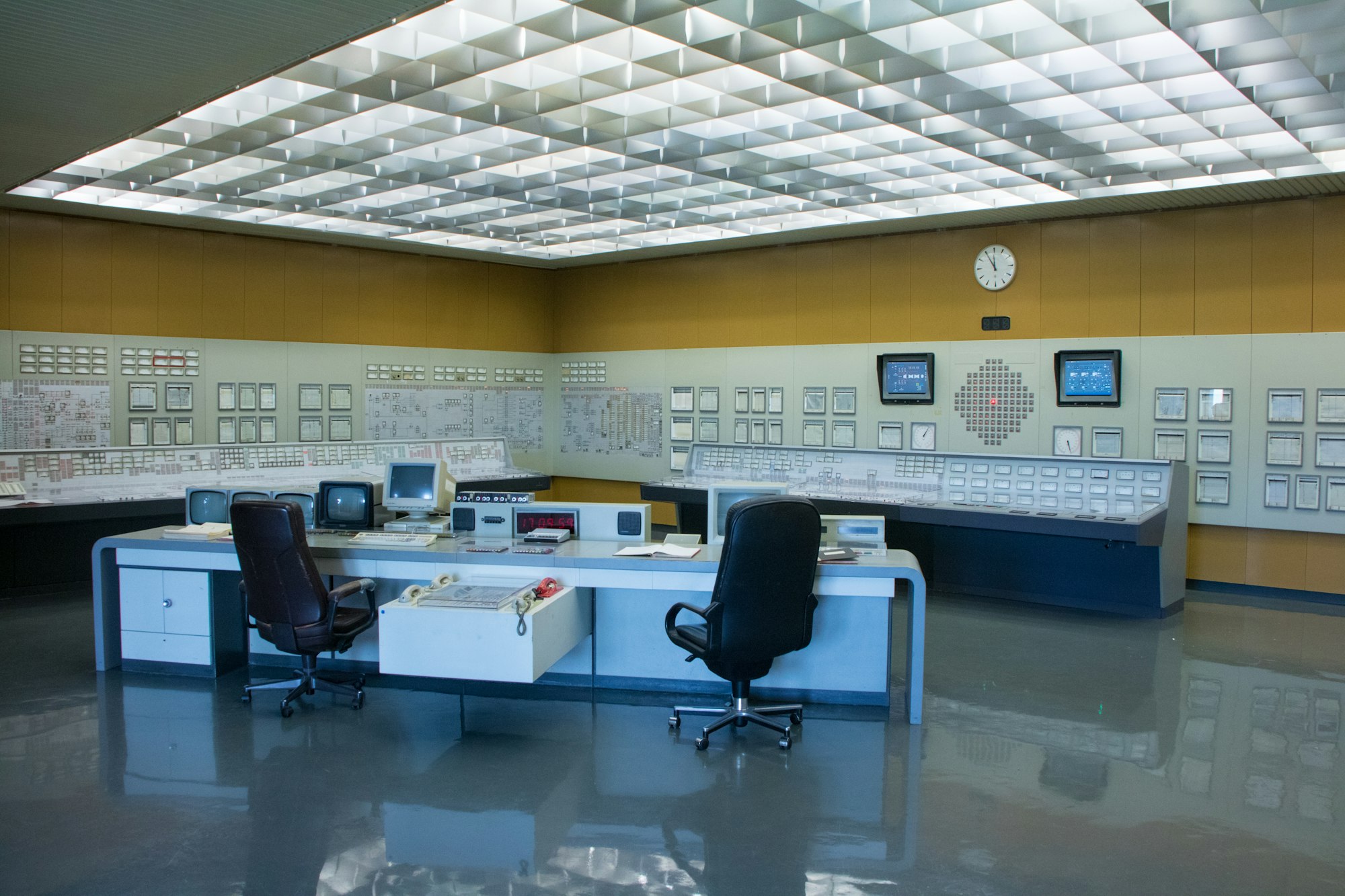
Photo: Miha Meglic / Unsplash
An alarm is a request for a decision, not a cooling system by itself. During an evening or holiday shift, the difference between a useful alert and background noise is often the clarity of ownership and escalation.
The operating distinction
Sensors can report a temperature, a leak indication, a pump state or a communication fault. Those signals do not all require the same response. A warning may permit investigation, while another condition demands immediate operational attention under the site's procedures. The person receiving it needs enough context to tell them apart.
Alert ownership should survive changes in staffing and equipment names. A clear notification can identify a meaningful location, explain the current operating mode and point to the applicable response record. That context reduces the effort needed to establish what the message refers to.
A practical example
Picture a hypothetical control room receiving a high-temperature alert from an isolated sensor. The response should connect the location, affected equipment and related readings. A message that contains only a device number forces the operator to reconstruct the system while the condition is changing.
Questions worth asking
An alert becomes actionable when its recipient can connect the message to equipment, context and responsibility. Reviewing that connection is more informative than comparing the total number of warnings generated by different systems.
- Who receives the alert when the primary contact is unavailable?
- Which related readings help distinguish a sensor issue from overheating?
- How is the response recorded for the next shift?
What the evidence supports
More alerts do not automatically improve coverage. Repeated low-value notifications can obscure a developing fault. Suppressing every noisy signal can create a different blind spot. Reviews should distinguish an equipment problem from a monitoring configuration problem, with changes controlled and recorded.
An alarm review can examine a small set of real events rather than debate the total number of sensors. Did somebody receive each notification, understand it and record the result? Were there avoidable repeats or gaps in responsibility? This makes the discussion about the operation of the response chain, while leaving the technical setpoints and equipment interventions to the site's authorized specialists and procedures.
A dependable alarm chain connects a meaningful condition to an informed person with a clear next step.
Quick check
How much did you catch? Tap a question to see the answer.
1. What is an alarm, according to the article?
Answer: A request for a decision, not a cooling system by itself.
2. What makes an alert useful after hours?
Answer: Clear ownership and escalation.
3. What context should a notification carry?
Answer: A meaningful location, the operating mode and a link to the response record.
Building an Escalation Path That Works at Night
An escalation path is easy to describe during a planning meeting and harder to rely on at the end of a long evening. The practical test is whether a person who did not write the procedure can follow it under pressure. A few design choices make that more likely.
- Name roles before names. Assign responsibility to a role such as on-shift operator or on-call mechanical lead, then map people to roles in a roster that changes with the schedule. Procedures tied to individual names go stale quickly.
- Define a response window for each level. State how long the first recipient has to acknowledge an alert before it moves to the next level. Without a stated window, an unanswered alert can sit in silence.
- Provide a working backup. Every escalation level needs a second contact who is genuinely available, not simply listed.
- Separate acknowledgment from resolution. Acknowledging an alert means someone owns it. It does not mean the condition is resolved, and the record should reflect both states.
- Test the path. Send a planned test alert during an evening shift and confirm that it reaches the right person, that the contact details work and that the response record is completed.
What a useful alert message contains
A message that can be acted on quickly usually includes the equipment or area in plain terms, the reading and its normal range, the time the condition began, any related readings, the current operating mode and a pointer to the relevant procedure. Those details let the recipient decide whether to investigate, escalate or follow an immediate response step.
Common Weak Points in After-Hours Coverage
Most failures in an alarm chain are not dramatic. They are small gaps that line up at the wrong moment.
- Stale contact information. A phone number or group address that changed during a reorganization can silently break the chain.
- Alert fatigue. When recipients see the same low-value warning repeatedly, they may learn to dismiss it, including on the night it matters.
- Ambiguous equipment labels. A device identifier that means something to the commissioning team may mean nothing to a newer operator.
- Unrecorded handovers. If the day shift was watching a developing condition, the evening shift needs to know that before the next alert arrives.
- Silent monitoring failures. A sensor that stops reporting may generate no alarm at all unless loss of communication is itself treated as an alert.
A short shift handover checklist
- Open alerts and their current owners
- Equipment in a non-standard operating mode
- Planned work scheduled during the coming shift
- Sensors or monitoring feeds known to be unreliable
- Any temporary changes to escalation contacts
Why This Matters Beyond the Control Room
For readers following data center operators and the businesses that rely on them, alarm ownership is part of what sits behind a reliability claim. A facility with excellent equipment can still have a weak response chain, and a well-organized response chain can limit the effect of an ordinary equipment fault. When a provider discusses uptime, the operating practices behind the number are as relevant as the hardware.
This is general explanation of operating practice. Specific setpoints, response steps and safety procedures belong to each site’s qualified specialists.
Questions Readers Ask
Should every alert wake someone up?
No. Alerts are usually tiered so that conditions requiring immediate attention reach a person right away, while informational warnings are reviewed during normal hours. The tiering itself should be reviewed and controlled.
How often should an escalation path be tested?
Often enough that changes in staff, contacts and tools are caught. Many teams test after any significant roster or system change as well as on a regular schedule.
What is the difference between a sensor fault and an equipment fault?
A sensor fault means the measurement is unreliable. An equipment fault means the system itself is not performing. Related readings from nearby sensors often help tell the two apart.
Who should own alarm configuration changes?
A named role with authority to approve them, with each change recorded so the next shift understands why an alert behaves differently.
AI infrastructure explainers and news on iPhone, iPad and Apple Watch.
Latest stories
View allCooling
Liquid Cooling vs. Air Cooling in Data Centers: The Basics
AI chips run hot. Here is how data centers keep them cool, and why the industry is moving from fans toward liquid.
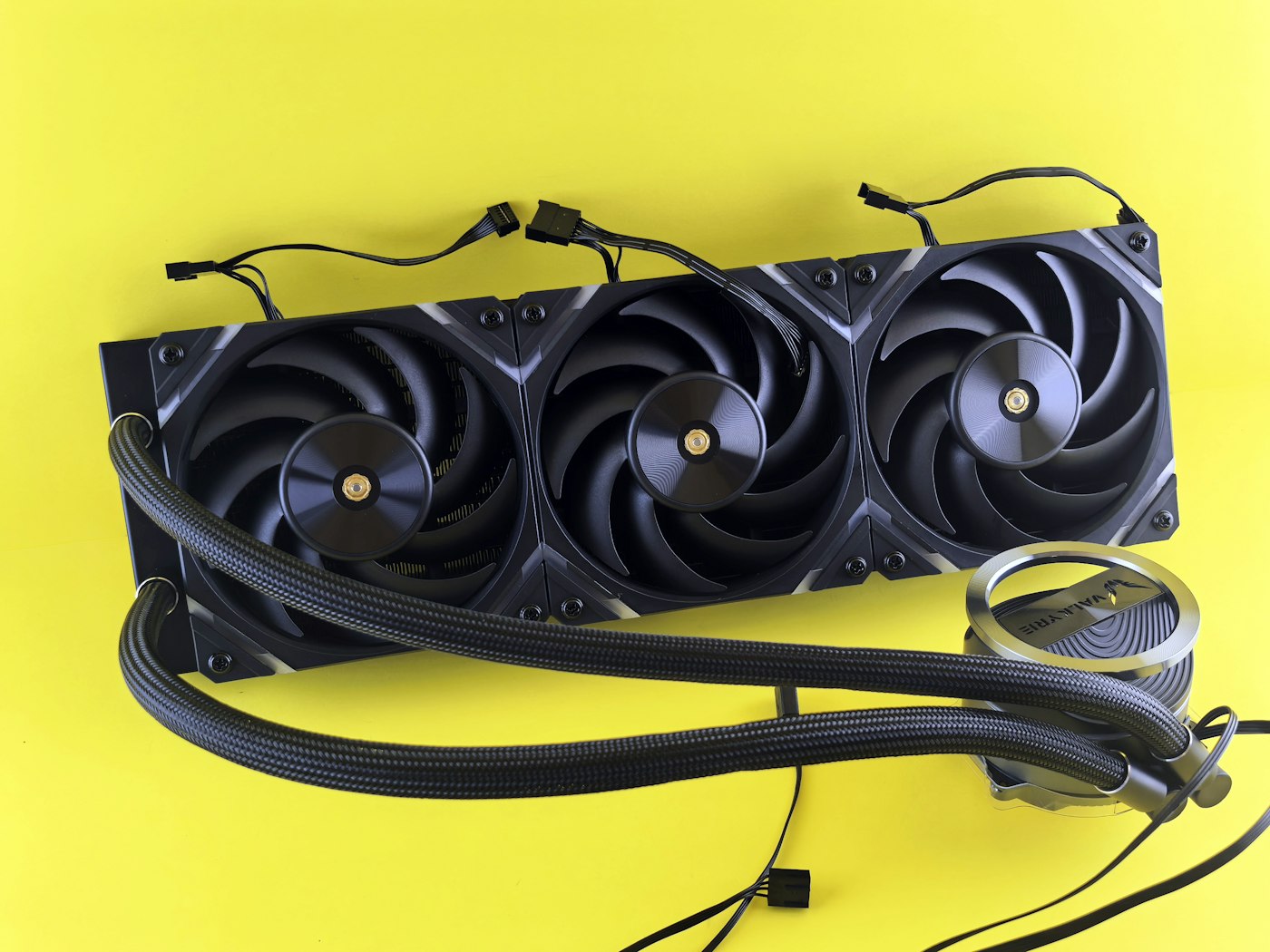
Every watt of electricity a server uses ends up as heat, and that heat has to go somewhere. For decades, data centers handled it with air: fans push cool air through the servers, and large air-handling systems remove the warm air from the room. That approach worked well for generations of computing. The arrival of dense AI hardware is changing the math, and the shift from air to liquid is now one of the most visible changes in how data centers are designed and built. Here is a plain-English guide to how each method works, why the industry is moving, and what the change means for the companies that supply it.
How Air Cooling Works
In a traditional data center, servers sit in tall metal racks lined up in rows. Cool air is delivered to the front of the racks, often through a raised floor or overhead ducts. Fans inside each server pull that air across the processors, memory and power supplies, and the warmed air exits out the back. Many facilities arrange racks in alternating “cold aisles” and “hot aisles” so cool supply air and warm exhaust air do not mix.
The warm air is then collected and cooled again by computer room air handlers, chillers or, in suitable climates, outside air. The system is well understood, relatively simple to maintain and familiar to nearly every data center technician. That familiarity is a big part of why air cooling has lasted so long.
Why Air Is Running Out of Room
Modern AI accelerators draw far more power per chip than older processors, and they are packed densely into racks. Air can only carry so much heat, so at high densities fans have to work very hard and the room has to move very large volumes of air. At some point it becomes impractical.
A few practical problems show up as density rises:
- Fan power climbs. Moving more air takes more energy, and the fans themselves add heat and noise.
- Hot spots appear. It becomes harder to deliver enough cool air evenly to every chip in a crowded rack.
- Space gets wasted. Operators may have to leave racks partly empty or spread equipment out to keep temperatures in range, which defeats the purpose of dense hardware.
- Building limits bite. Air handling equipment, ductwork and ceiling heights set a ceiling on how much heat a room can remove.
The basic physics is that a given volume of air holds and carries much less heat than the same volume of water or another liquid. As the heat per rack rises, the amount of air needed grows to the point where liquid becomes the more sensible tool.
How Liquid Cooling Works
Liquid carries heat much more effectively than air. The most common approach for AI hardware is direct-to-chip cooling: a cold plate sits on top of each chip, and liquid flowing through it carries heat away to a heat exchanger. A more specialized approach, immersion cooling, submerges entire servers in a non-conductive fluid.
Direct-to-chip cooling
In a direct-to-chip system, a metal cold plate is mounted directly on the hottest components, usually the processors and accelerators. Coolant runs through small channels in the plate, absorbs heat and flows out through tubing to a coolant distribution unit. That unit transfers the heat to a separate facility water loop, which carries it out of the building to chillers, cooling towers or dry coolers. Because the coolant only touches the cold plate, the rest of the server can remain fairly conventional.
Immersion cooling
In immersion cooling, servers are placed in tanks filled with a fluid that does not conduct electricity. The fluid surrounds every component and absorbs heat directly. Some systems keep the fluid as a liquid and pump it through a heat exchanger; others use fluids that boil at low temperatures and condense back. Immersion can handle very high heat loads, but it requires different hardware handling, specialized tanks and new maintenance routines, which is why it remains the more specialized option.
The Trade-offs
Liquid systems need plumbing, pumps, leak detection and different maintenance skills. Retrofitting an existing air-cooled building can be costly, which is why many new AI facilities are designed for liquid cooling from the start, often with air still used for the rest of the equipment.
Here is how the two approaches compare at a glance:
- Air cooling: simple, familiar and widely supported, but limited at very high rack densities.
- Direct-to-chip liquid: handles much higher densities and keeps most server design familiar, but adds piping, coolant distribution units and leak monitoring.
- Immersion: handles extreme densities, but changes how servers are installed, serviced and replaced.
- Hybrid designs: most new facilities combine liquid for the hottest chips with air for storage, networking and other gear.
A common mistake is to think of the shift as all-or-nothing. In practice, the hybrid model is the norm. Even in a liquid-cooled rack, some components still shed heat into the air, so the room still needs air handling, just less of it.
Why Investors Pay Attention
The shift creates demand for coolant distribution units, cold plates, chillers and the engineering firms that design these systems. It is one of the clearest physical signs of how AI is changing data center design.
Cooling is not a side detail. It affects where data centers can be built, how much power they use beyond the computing itself, how quickly they can be brought online and how long the equipment lasts. When a large cloud company describes its next generation of facilities, the cooling design tells you a great deal about the hardware it expects to run.
Signals worth tracking include:
- Announcements of new facilities described as “liquid-ready” or designed for high-density AI racks
- Comments from data center operators about retrofit costs and timelines
- Supplier commentary about orders for cooling equipment and the engineering services that go with it
- Water and power use discussions, since cooling choices affect both
Putting It Together
The move from air to liquid is not a fad; it follows directly from the heat that dense AI chips produce. Air remains essential, and it will keep cooling a large share of the equipment in any building. But for the hottest hardware, liquid has become the practical choice, and new buildings are increasingly designed around it from day one.
Three things to do if you want to follow this trend:
- When you read about a new data center, look for how it will be cooled and what rack densities it is designed for.
- Learn the basic vocabulary: cold plate, coolant distribution unit, immersion, hot aisle and cold aisle.
- Connect cooling news back to the hyperscalers’ capital spending plans, since that is where most of the demand starts.
BOSSTOX publishes educational content, not investment advice. For decisions about your own money, talk with a qualified financial professional.
Cooling
Liquid-Cooling Leak Detection and Reliability
Liquid cooling can unlock dense AI racks, but reliability depends less on the promise of water near electronics than on disciplined detection, isolation, testing, and maintenance.
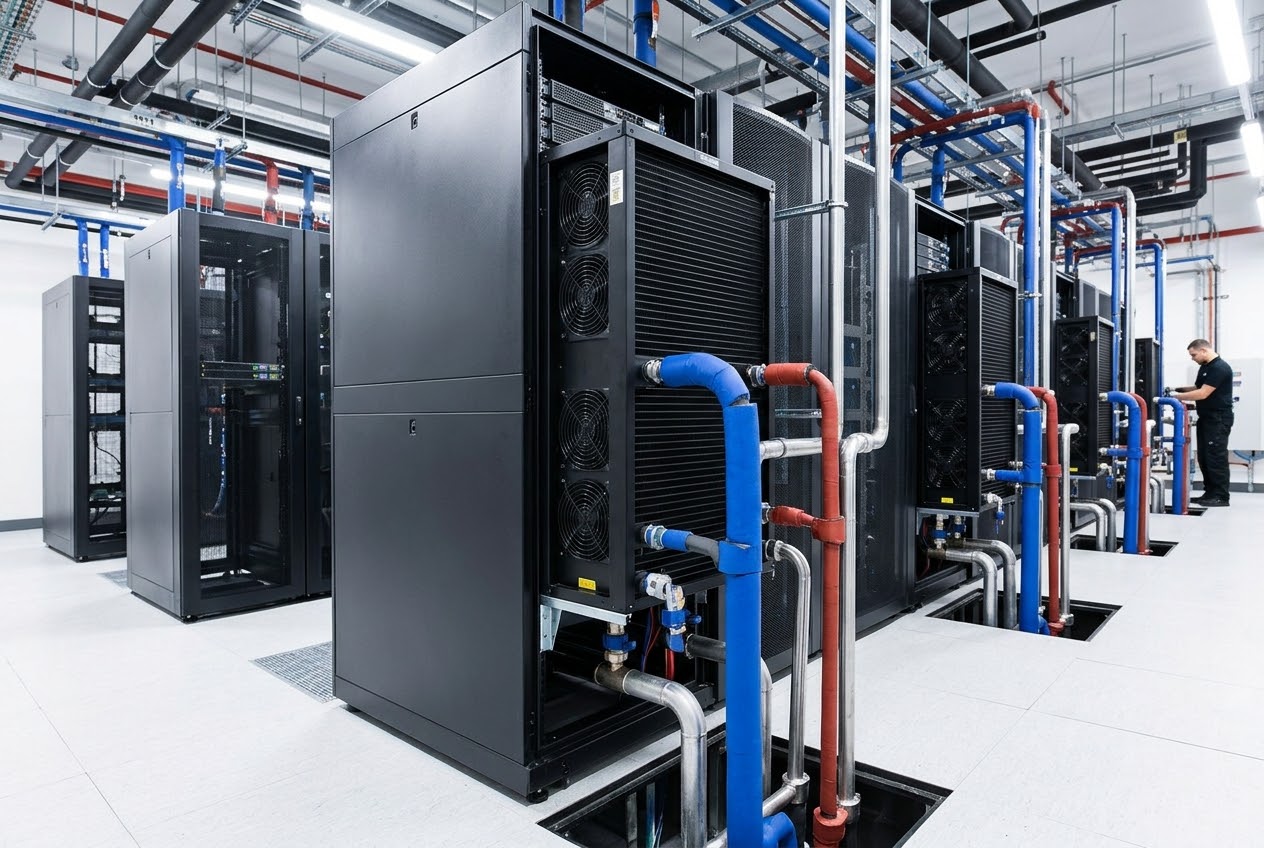
Liquid cooling is becoming ordinary infrastructure for high-density AI. It is also one of the easiest parts of the design to oversimplify. A cooling loop does not fail only when a pipe bursts. It can fail through a loose quick disconnect, a worn gasket, a cracked manifold, a blocked filter, a control error, condensation, or a slow seep that is discovered only after equipment has been exposed.
The reliability question is therefore not whether liquid cooling leaks. Every mechanical system has a leak risk. The question is whether the system is designed to detect a leak early, isolate it without losing an entire row, and keep water away from energized electronics.

Map the liquid boundary
A direct-to-chip system usually has several boundaries: the facility water loop, a coolant distribution unit, secondary hoses or manifolds, cold plates, quick disconnects, and sometimes internal server tubing. Each boundary has different pressure, chemistry, temperature, and service procedures.
The first step is a component-level map. The operator should know the normal pressure and flow at every important segment, the locations of isolation valves, the drains, and the sensors. A “liquid-cooled rack” is not one component. It is a chain of interfaces.
ASHRAE’s guidance on liquid cooling recommends drip pans, leak detection, and piped drains where piping passes over critical equipment. The principle is straightforward: do not rely on a technician seeing a puddle. Put a sensor and a controlled path under the places where liquid could reach a server.

Detection should be layered
A reliable system combines different signals. Rope or spot sensors can detect liquid at the floor or in a drip tray. Pressure sensors can identify a rapid drop. Flow meters can reveal a pump or valve problem. Differential temperature can identify a cold plate that is not receiving the expected coolant. Server telemetry can show rising component temperatures before a leak becomes obvious.
No one sensor should be the only trip signal. A false alarm can interrupt an AI job; a missed alarm can damage equipment. Controls should use voting logic or staged responses where appropriate: alert, slow the affected rack, close an isolation valve, and then remove power if the evidence is strong.
The response must be faster than the damage path
Early detection has value only if the operator has a defined response. The sequence should state who receives the alarm, which valve closes, how much coolant remains in the isolated section, and whether the rack can be serviced without taking adjacent racks offline.
A typical response may include stopping the local pump, closing supply and return valves, reducing IT power, and allowing the rack to coast down. The exact sequence depends on the equipment. A high-speed automatic shutoff may protect one rack but create pressure transients if it closes too quickly. Controls engineers must test the hydraulic behavior rather than assume that “closed” means “safe.”
Facility teams should keep replacement quick disconnects, gaskets, hoses, sensors, and pump components in stock. A leak response that waits for an international part can turn a small event into an extended capacity loss.

Water chemistry matters
Coolant should be treated as an electrical and mechanical design input. Impurities can accelerate corrosion, clog microchannels, or damage seals. Inadequate treatment can shorten the life of cold plates and heat exchangers. Over-treatment can also create compatibility problems.
The operator needs a sampling plan, conductivity targets, filtration policy, microbiological controls where relevant, and a record of additions or flushes. The plan should identify which loop is being tested. Facility water and secondary coolant are not necessarily the same fluid.

Condensation is a separate risk
A leak is liquid escaping from the loop. Condensation is water forming on a surface because the surface is colder than the surrounding air’s dew point. A system can be leak-free and still create moisture if the coolant temperature is set too low or humidity control fails.
The safe design sets a minimum supply temperature or dew-point margin and monitors room humidity. The control system should prevent a valve or setpoint change from pushing the loop below the safe margin. Startup and shutdown deserve special attention because air conditions can change faster than water temperature.
Testing is part of uptime
Commissioning should include pressure testing, flow balancing, sensor calibration, alarm testing, valve isolation, and simulated fault response. The test should cover a slow leak, a fast pressure drop, a failed pump, a closed valve, a blocked filter, and a loss of communications.
The team should repeat critical tests after maintenance. A quick disconnect that was reconnected is not automatically good because it clicked into place. Inspect, pressure-test, and record it.
NVIDIA’s DGX Vera Rubin NVL72 documentation describes leak detection as a protection for equipment, data integrity, reliability, and safety. It also shows how the next generation of AI racks combines high power with liquid-cooled bus bars and manifolds. In other words, leak detection is not a luxury added after the rack is designed; it is part of the rack’s operating architecture.
A good reliability metric is recoverability
Operators often focus on whether a leak happened. A better metric is the size and duration of the resulting outage. Can one rack be isolated? Can a technician replace a component while the rest of the row runs? Are alarms visible in the same operations center as power and fire alarms? Can the organization prove that staff practiced the response?
Liquid cooling can be highly reliable when the system is designed as industrial infrastructure instead of treated as a plumbing accessory. The winning design keeps the liquid boundary visible, instrumented, segmented, and serviceable. That is what makes high-density AI practical.
Sources
- ASHRAE, “Emergence and Expansion of Liquid Cooling in Mainstream Data Centers”: ashrae.org
- NVIDIA, “DGX Vera Rubin NVL72 User Guide: Hardware,” accessed October 2026: docs.nvidia.com
- Vertiv, “How Rear-Door Heat Exchangers Support High-Density Rack Cooling,” 2025: vertiv.com
- U.S. Department of Energy, “United States Data Center Energy Usage Report 2025 Update,” 2025: energy.gov
- IEA, “Energy and AI,” April 10, 2025: iea.org
BOSSTOX Research articles are drafted with AI assistance and reviewed by our editors before publication. See our editorial standards.
Cooling
Rear-Door Heat Exchangers Explained
A rear-door heat exchanger is a practical middle step between all-air cooling and liquid-cooled servers, taking heat out at the rack without replacing every server in the room.
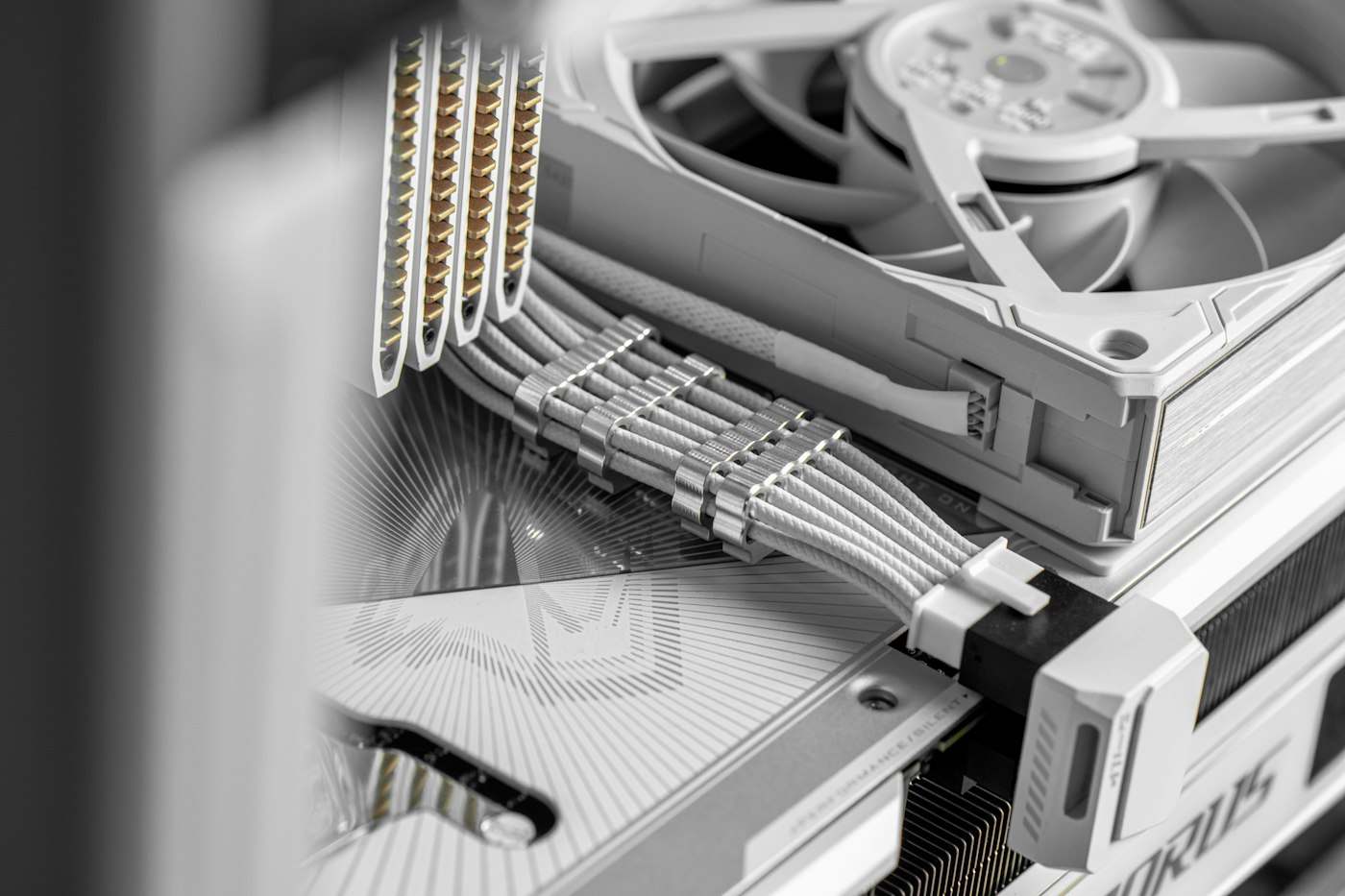
AI hardware has pushed many data centers beyond the point where air alone is comfortable. A rear-door heat exchanger, or RDHx, is one response. It sits on the back of a rack and captures exhaust heat before that air returns to the room.
The technology sounds simple because the core idea is simple: move heat from hot rack exhaust into a water loop. The engineering question is how much heat the door can remove, how the water loop is controlled, and how the facility handles the remaining heat and the liquid connection.
The physical arrangement
In a conventional air-cooled rack, cool supply air enters the server fronts, passes across components, and exits hot at the rear. A rear-door heat exchanger replaces or attaches to the rear door. Fans or the server fans push hot exhaust through a coil. Water flows through the coil and carries heat away.
A passive door relies primarily on server airflow. An active door includes fans that add airflow or reduce the pressure burden on the servers. Active doors can provide more control, but they add electrical consumption and another set of motors and controls.
The door can be dry, using refrigerant or another heat-transfer method, or it can use chilled water. Chilled-water RDHx systems are common in high-density environments because water carries much more heat per unit volume than air.
Vertiv announced the global launch of its CoolLoop chilled-water RDHx for AI and high-performance computing applications in March 2025. The company said the product could support up to 80 kilowatts per rack and could operate as a standalone system or complement direct-to-chip liquid cooling. That number is a product rating, not a universal promise: actual capacity depends on inlet air temperature, water temperature, airflow, server layout, and control limits.
Why an RDHx is attractive
The main advantage is that it can address high-density racks without immediately replacing the entire server fleet or distribution system. A data center can deploy doors on selected racks while other rows remain air cooled.
That makes the technology useful for mixed environments. A legacy enterprise row may operate at 8 to 15 kW per rack, while a new AI row may need far more. The operator can add targeted heat removal where it is needed.
RDHx also reduces the amount of heat released into the room. That can lower the room’s cooling burden and preserve supply-air conditions for neighboring racks. It does not eliminate heat; it changes where the heat is captured.
Vertiv’s educational material cited a shift toward higher rack densities by 2025: racks below 10 kW represented 38% of installed capacity, compared with 47% in 2024; the 10-to-20 kW range represented 30%, and 20-to-30 kW represented 28%. These percentages describe the cited installed-capacity mix, not every data center. The direction is what matters: more racks are entering a zone where room air management becomes harder.
The water loop is the system
An RDHx is only as useful as the loop behind it. The facility needs pumps, heat exchangers, valves, filtration, controls, isolation points, and a heat-rejection system. The water temperature must remain low enough to absorb heat but high enough to avoid unnecessary chiller work.
A warmer water loop can sometimes reject heat more efficiently or allow economization, but it reduces temperature difference across the coil. A colder loop improves heat transfer but can raise chiller energy and condensation risk.
The design must also consider pressure. High pressure can increase the consequences of a leak. Poorly located connections can make service difficult. Drip trays, leak detection, automatic shutoff, and drainage are not accessories; they are part of the equipment-protection system.
RDHx versus direct-to-chip
Direct-to-chip liquid cooling places cold plates on processors and sometimes memory or power components. It captures heat at the source and can support extremely dense systems. It also requires compatible servers, manifolds, quick disconnects, facility distribution units, and a service model for liquid-connected equipment.
An RDHx does not require liquid inside the server. It is therefore easier to retrofit and can work with a broader range of equipment. Its limit is that it cools the air leaving the rack. If the hottest components are concentrated inside a very dense server, the rack may still need direct-to-chip or immersion cooling.
The choices are not exclusive. A row may use direct-to-chip for GPUs and an RDHx to remove residual heat from CPUs, memory, network cards, and power supplies. Vertiv’s product material describes this complementary use.
How to underwrite an RDHx project
The first metric is not the door’s maximum kW rating. It is the measured rack load at the intended water temperature and airflow. Ask for performance curves and test conditions.
The second metric is availability. What happens if the pump stops, a valve closes, a fan fails, or a door is removed for service? Can the rack throttle, continue briefly on room air, or trip safely? Does the facility have redundant pumps and isolated loops?
The third metric is maintenance. Doors add weight, hinges, hoses, controls, and a service process. Technicians need safe access and a plan for moving the door without stressing connections.
RDHx is valuable because it gives operators a middle path. It is more than a special door but less invasive than converting every server to liquid cooling. For AI sites, that flexibility can reduce the gap between a high-density rack design and the physical building that must support it.
Commissioning also exposes a common blind spot: the room may be designed for a door’s rated heat removal, but the cooling plant may not have enough pumping, heat-rejection, or control capacity to sustain every door at once. The acceptance test should run the intended rack mix under realistic outdoor conditions and confirm that supply temperature, flow, and alarms stay within limits.
Sources
- Vertiv, “Vertiv Announces Global Launch of Chilled-Water Rear Door Heat Exchanger,” March 18, 2025: vertiv.com
- Vertiv, “How Rear-Door Heat Exchangers Support High-Density Rack Cooling,” 2025: vertiv.com
- Vertiv, “Vertiv CoolLoop RDHx”: vertiv.com
- ASHRAE, “Emergence and Expansion of Liquid Cooling in Mainstream Data Centers”: ashrae.org
- IEA, “Energy and AI,” April 10, 2025: iea.org
BOSSTOX Research articles are drafted with AI assistance and reviewed by our editors before publication. See our editorial standards.

Cooling Alarms Need an Owner After the Day Shift Leaves

How Hyperscaler Capex Guidance Works

An Idle Accelerator Can Still Be Waiting on Useful Work

Earnings Season 101: Beats, Misses and Guidance, Explained With This Week’s Reports

Transformer Lead Times Are Becoming a Data-Center Schedule Risk

Gas Turbines on Data-Center Campuses

Water Use and Dry Coolers: The Tradeoff AI Sites Cannot Avoid

GPU Supply Chains: How AI Hardware Gets Made, Moved, and Bottlenecked
Cooling Alarms Need an Owner After the Day Shift Leaves
How Hyperscaler Capex Guidance Works
An Idle Accelerator Can Still Be Waiting on Useful Work
Earnings Season 101: Beats, Misses and Guidance, Explained With This Week’s Reports
-
 Power & Grid4 weeks ago
Transformer Lead Times Are Becoming a Data-Center Schedule Risk
-
 Power & Grid4 weeks ago
Gas Turbines on Data-Center Campuses
-
 Cooling1 month ago
Water Use and Dry Coolers: The Tradeoff AI Sites Cannot Avoid
-
 Compute & Silicon1 month ago
GPU Supply Chains: How AI Hardware Gets Made, Moved, and Bottlenecked
-

 Power & Grid3 weeks ago
Battery Storage at AI Sites
-

 Cooling3 weeks ago
Liquid-Cooling Leak Detection and Reliability
-

 Capital & Backlog2 weeks ago
AI Infrastructure’s Rough Week: Chips Fall 6.7% as Meta Lifts Capex Floor
-

 Explainers1 month ago
Explainer: What an AI Inference Stack Actually Does