
Networking
Why 800G and 1.6T Transceivers Matter to the AI Buildout
Faster optical transceivers are a response to rising switch and accelerator bandwidth, and their value shows up in link count, power, reach and network completion dates.

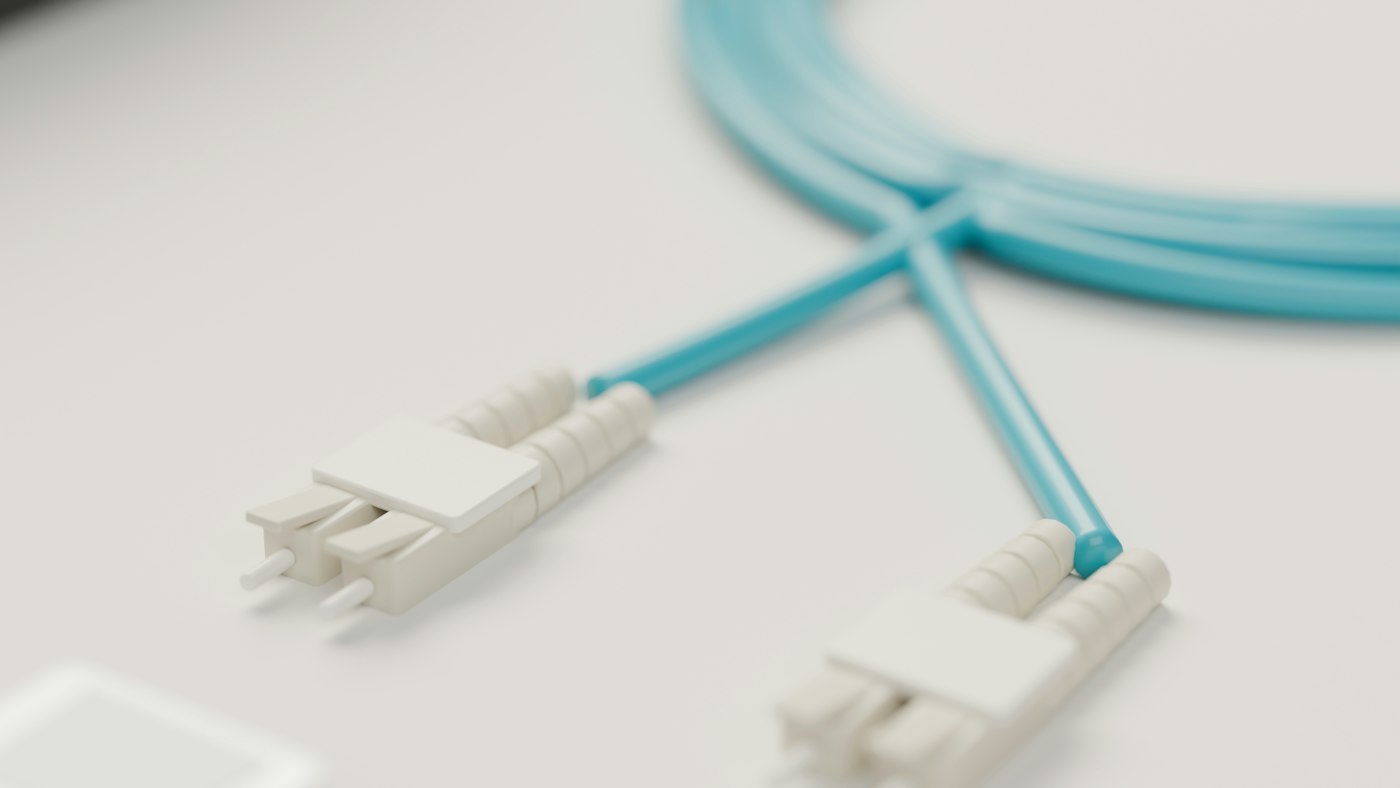
Bandwidth is a construction input
An AI data center can have enough floor space and enough GPUs but still fail to deliver useful throughput if the network cannot move data between them. Optical transceivers connect switches, servers and, in some cases, buildings or campuses. As the compute fleet grows, the network needs more links and each link needs more bandwidth.
An 800G transceiver can move 800 gigabits per second under the relevant interface specification. A 1.6T transceiver doubles that nominal rate. The numbers matter because they reduce the number of ports, fibers and switch stages needed for a given traffic load. They do not eliminate the need for careful topology, optics reach and congestion control.
What changed from 400G
AI clusters increase traffic in both scale-up and scale-out networks. Scale-up connects accelerators within a tightly coupled system. Scale-out connects racks and pods across a larger fabric. The optical requirements differ by distance, protocol, fiber type and error-correction scheme.
The move to 800G commonly uses multiple optical lanes. Broadcom’s 800G product materials describe 200-gigabit-per-lane PAM-4 technology and support for 800G DR4 and 1.6T DR8 pluggable designs. Coherent describes 800G as production-ready and 1.6T as the next step, with optical lanes moving from 100 gigabits per second toward 200 gigabits per second.
Higher speed can lower the amount of equipment required for a target bandwidth, but it can increase the engineering difficulty of each link. Signal integrity, laser performance, digital signal processing, fiber connectors, thermal limits and error correction all become more important.
The port-count math
Suppose a network needs 51.2 terabits per second of aggregate switching bandwidth. At a nominal 800G per link, it takes 64 links if the design were perfectly divisible and had no overhead. At 1.6T, it takes 32. Real systems include protocol overhead, redundant paths, uplinks, breakouts and spare capacity, so the final bill of materials is larger.
The example shows why transceiver speed can influence the whole system. Fewer physical links can mean fewer switch ports and less cabling. It can also mean fewer opportunities for link failure. But each transceiver may be more expensive, more power-hungry or harder to source.
Reach is part of the product
An 800G transceiver is not a single product. A short-reach multimode module, a 500-meter single-mode module and a multi-kilometer data-center-interconnect module use different lasers, fiber and thermal designs.
Coherent says AI-fabric Level 0 links are often below 50 meters, while links from top-of-rack to spine can reach up to 500 meters and longer router connections can run from 2 to 10 kilometers. The same 800G label therefore hides different products and supply chains.
Why 1.6T is not just a faster 800G
A 1.6T module often uses eight 200-gigabit-per-second lanes. That raises the demands on the host electrical interface, optical engine, DSP, thermal design and fiber connector. The module must also maintain an acceptable bit-error rate across the target reach.
The network may need new switch ASICs, new NICs, new cables and new test equipment. A data center cannot simply replace every 800G module with a 1.6T unit unless the switch, port, firmware and fiber infrastructure are compatible.
Power matters
Broadcom’s optical-interconnect material compares example power levels of 14 watts for an 800G pluggable and 25 watts for a 1.6T pluggable, while showing lower example values for CPO. Actual power depends on reach, temperature, DSP and form factor. Even so, optical power becomes a facility issue when a campus deploys hundreds of thousands of modules.
If a network has 100,000 800G modules at 14 watts each, the optics alone draw 1.4 megawatts before switch ASICs, servers and cooling. At 25 watts per module, the same count would draw 2.5 megawatts. The arithmetic is simple, but the planning implication is large: optics can move from a component line item to a measurable load.
What buyers should track
Track shipment dates, not demos. Broadcom announced a 3-nanometer 200-gigabit-per-lane PHY on August 27, 2025 for 800G DR4 and FR4 pluggable transceivers. Coherent’s product data for a 1.6T DR8 OSFP module lists an operating distance of 500 meters and an 8-by-200G PAM-4 architecture.
The relevant diligence questions are:
- Is the module in volume production?
- Which switch and NIC interfaces support it?
- What is the reach and fiber type?
- What is power at the target temperature?
- Is the module interoperable across vendors?
- How many modules are required for the planned cluster?
- Are lasers, DSPs and optical engines supply constrained?
BOSSTOX takeaway
800G and 1.6T transceivers matter because AI infrastructure is a bandwidth system. Faster links can reduce port count and cabling, but they also concentrate cost, heat and supply-chain risk into more complex components.
The best project model connects transceiver speed to rack count, switch count, fiber length, port power and commissioning dates. “The network is ready” should mean those links have been tested at the target protocol and workload, not merely that a product was announced.
The link budget should be modeled at the cluster level. An operator needs to know whether the module count grows with every accelerator, every switch, every redundant path or every building-to-building connection. It should also reserve spare modules and account for failures during commissioning. A 1.6T roadmap can reduce ports in the steady state but create an interim period where 800G and 1.6T equipment must interoperate.
The procurement risk is concentrated in specialized inputs. Lasers, DSPs, optical engines, connectors and test systems may each have different lead times. A network can therefore be “designed” months before the optics are actually available. Shipping the first module is a milestone; shipping enough tested modules to fill a production fabric is the milestone that changes capacity.
Sources
- Broadcom, 800G and 1.6T PAM-4 PHY product brief: docs.broadcom.com
- Broadcom, BCM83822 800G PHY, August 27, 2025: broadcom.com
- Coherent, “Datacom Innovation in the AI Era”: coherent.com
- Coherent, 1.6T-DR8 OSFP transceiver product page: coherent.com
- Broadcom, “Optical Interconnects for AI,” 2024: docs.broadcom.com
BOSSTOX Research articles are drafted with AI assistance and reviewed by our editors before publication. See our editorial standards.
Latest stories
View allNetworking
Fiber Repair Slack Is Part of the Restoration Plan
Fiber routes are often described by where they run and how much traffic they can carry. Restoration also depends on physical access, repair arrangements and usable spare length. A route map alone does not describe how a damaged section returns to service.
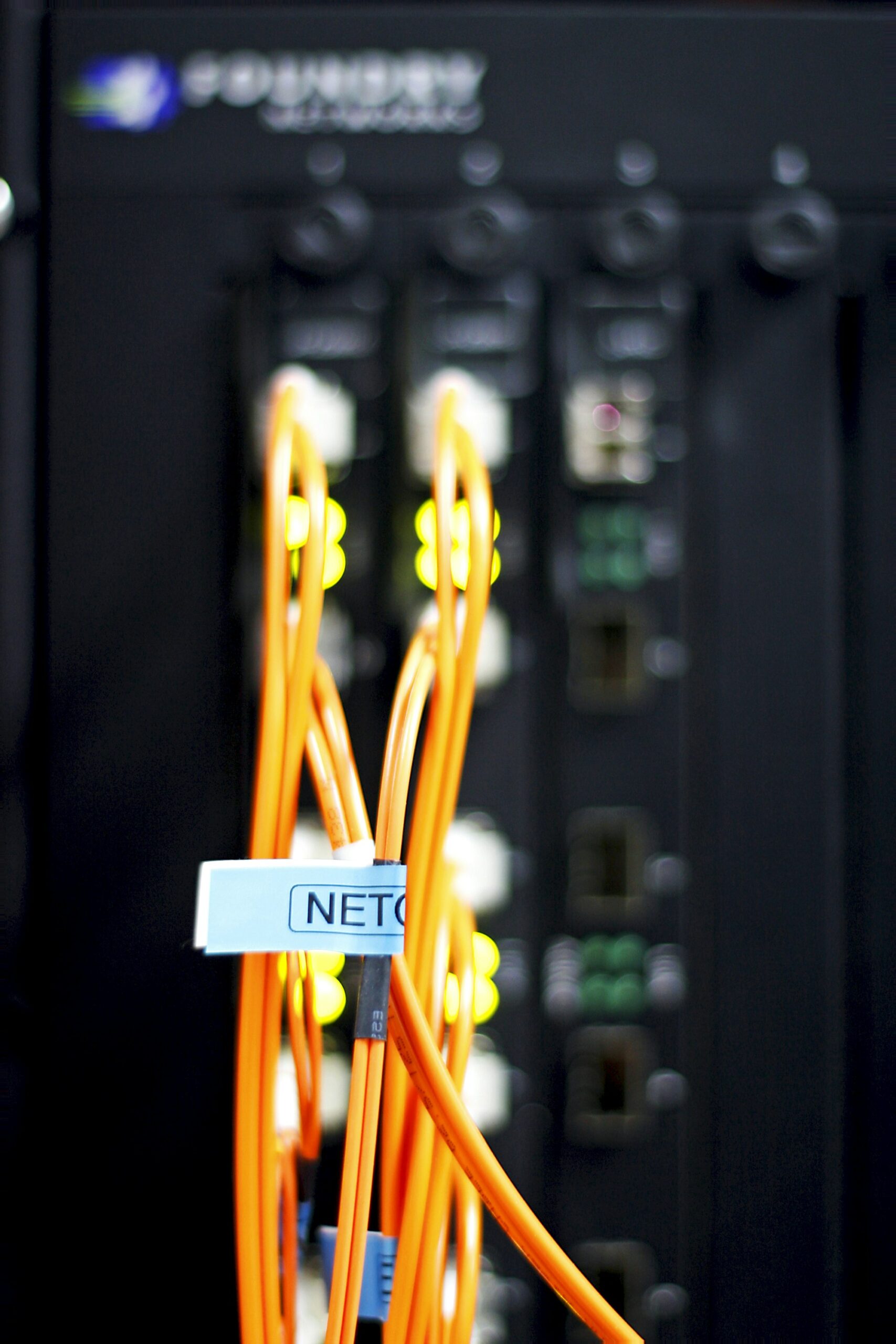
Fiber routes are often described by where they run and how much traffic they can carry. Restoration also depends on physical access, repair arrangements and usable spare length. A route map alone does not describe how a damaged section returns to service.
The operating distinction
A repair may require locating the fault, reaching the work area and joining intact fiber. Conditions differ along buried routes, building entrances and shared infrastructure. Spare materials and documented ownership help, but they need to fit the actual route and the authority to work on it.
Repair planning should identify the boundary between the cable owner and the service provider. The organization selling the connection may coordinate work performed by another party. That arrangement can work well, but its responsibilities need to be understood before an incident.
A practical example
Picture a hypothetical damaged cable beneath a busy road. A crew and replacement materials may be ready while access approval controls the schedule. A different fault in an accessible equipment room presents another restoration problem, even if both interrupt the same amount of traffic.
Questions worth asking
Restoration depends on the condition of the route and the organizations responsible for it. A dispatch promise is useful context, but access, materials and acceptance can determine when the connection actually becomes usable again.
- Who controls access to the likely repair locations along the route?
- Are restoration materials and responsible crews identified for this cable system?
- What service remains available while the physical repair is underway?
What the evidence supports
Readers should avoid turning a supplier's general repair target into a guarantee for every incident. The practical question is what the agreement covers, what the route requires and which dependencies can extend the work. Alternate service should be assessed separately from repair speed.
The restoration discussion should also explain how a repaired path is accepted back into service. Physical work finishing at the fault location is not necessarily the final service check. A clear account connects the repair record to the customer's observed result and states whether temporary routing remains in use. This separates progress on the physical asset from confirmation that the intended end-to-end connection has returned to normal operation.
The repair story runs from fault detection through access and materials to verified restoration, not just dispatch.
Quick check
How much did you catch? Tap a question to see the answer.
1. What practical steps and permissions can affect a fiber repair?
Answer: A repair may require locating the fault, reaching the work area and joining intact fiber. Conditions differ along buried routes, building entrances and shared infrastructure. Spare materials and documented ownership help, but they need to fit the actual route and the authority to work on it.
2. Why should the cable owner and service provider be distinguished?
Answer: Repair planning should identify the boundary between the cable owner and the service provider. The organization selling the connection may coordinate work performed by another party. That arrangement can work well, but its responsibilities need to be understood before an incident.
3. What may control repair timing beneath the hypothetical busy road?
Answer: Picture a hypothetical damaged cable beneath a busy road. A crew and replacement materials may be ready while access approval controls the schedule. A different fault in an accessible equipment room presents another restoration problem, even if both interrupt the same amount of traffic.
Why Slack Length Matters in a Repair
When a fiber cable is cut, the damaged section usually has to be removed and the remaining ends joined, either directly or with a new section of cable and additional splices. That work needs enough spare length near the damage to bring the ends into a splice enclosure and work on them properly. Operators often store loops of extra cable at intervals along a route for this purpose. If the stored slack is too far from the damage, has already been used in an earlier repair or was never installed, the crew may need to place a longer replacement section, which adds splices and time.
Slack can also be consumed quietly over the years. Each repair, relocation or road project may draw on the stored length. Unless the records are updated, the plan may assume material that is no longer there.
A Restoration Readiness Review
- Identify likely fault locations. Consider road crossings, construction corridors, building entrances and shared structures.
- Confirm slack and material records. Ask whether stored slack and spare cable have been verified and updated after recent work.
- Clarify ownership. Establish who owns each cable segment and who is authorized to perform repairs on it.
- Understand access conditions. Identify where permits, traffic control or property access approvals may be needed.
- Define temporary service. Describe what alternate routing exists while the physical repair is underway.
- Agree on acceptance. State how the repaired path will be tested end to end and returned from temporary routing.
Common mistakes
One mistake is treating dispatch time as restoration time, when locating the fault, gaining access and splicing can each take longer than reaching the site. Another is assuming that the service provider owns the cable when it may lease it from someone else. A third is leaving traffic on temporary routing indefinitely after repair, which can reduce diversity without anyone noticing.
What This Means for Businesses That Depend on Connectivity
For an organization relying on a particular route, understanding restoration helps set realistic expectations. A provider able to describe its repair arrangements, ownership boundaries and temporary routing is giving a fuller picture than a single response target. For readers following network infrastructure, repair capability is one of the practical, less visible factors that shapes how long an interruption actually lasts.
A route is resilient partly because of where it runs, and partly because of how quickly it can be put back together.
Questions Readers Ask
How is a fiber fault located?
Technicians commonly use test equipment that sends light down the fiber and measures reflections to estimate the distance to the break, then confirm the location in the field.
Can a repair be faster than finding the fault?
Sometimes the splicing work is quicker than locating the damage and gaining access, especially on buried routes.
Should customers ask about slack?
They can reasonably ask how the provider plans repairs on critical routes, even if detailed records remain confidential.
AI infrastructure explainers and news on iPhone, iPad and Apple Watch.
Networking
The Control Plane Can Be a Shared Dependency Across Separate Systems
Two independent-looking systems can still rely on one service to decide what they should do. Configuration management, identity, name resolution and orchestration can become common dependencies even when the data paths are physically separate.
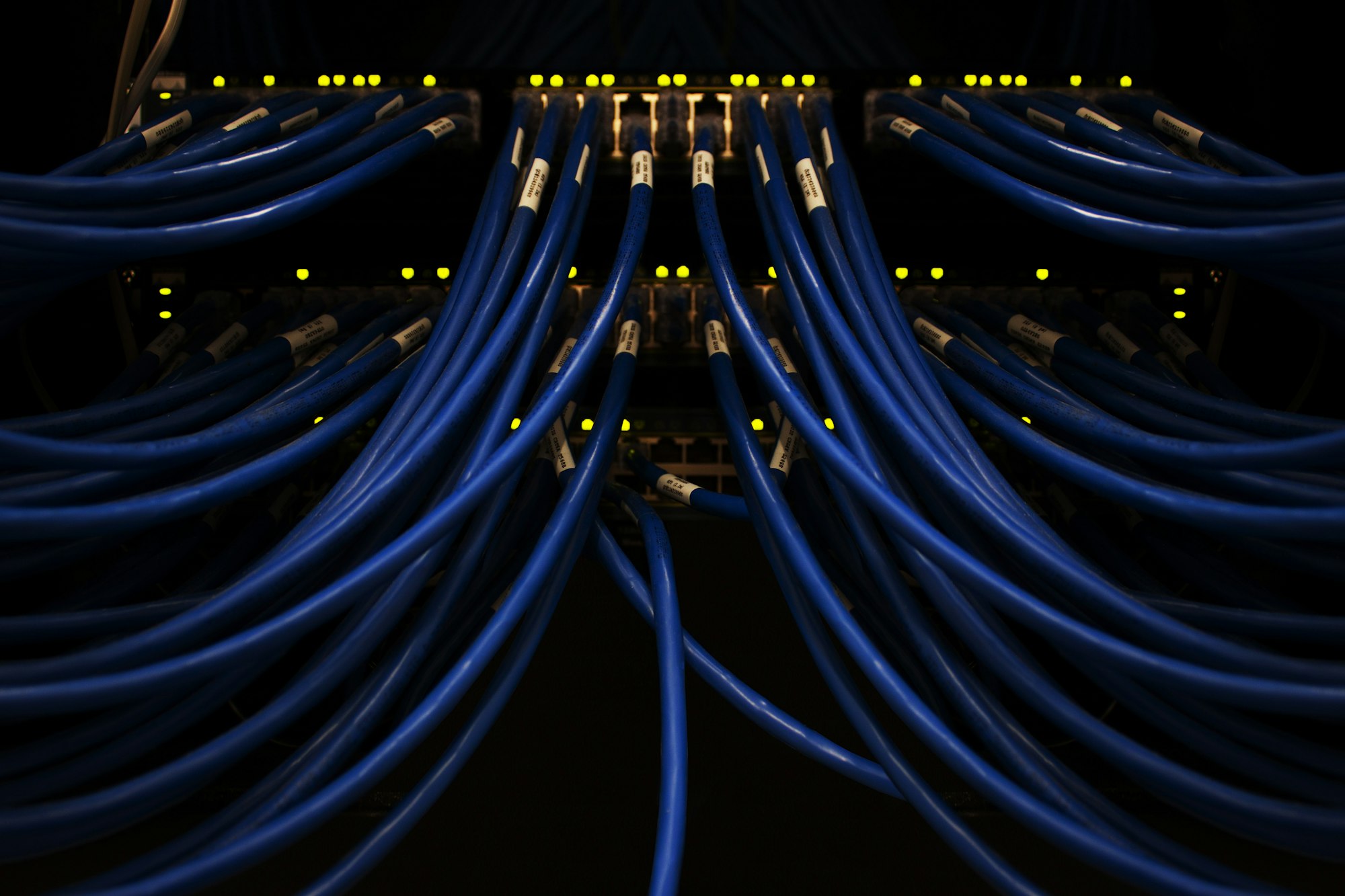
Two independent-looking systems can still rely on one service to decide what they should do. Configuration management, identity, name resolution and orchestration can become common dependencies even when the data paths are physically separate.
The operating distinction
The data plane moves the work, while control functions establish or manage its behavior. Some equipment continues operating through a temporary control interruption; other actions may fail until control returns. The distinction matters because successful ongoing traffic does not necessarily prove that new sessions or changes will work.
Management dependencies can extend beyond the network team. Identity services and access systems may be owned by another group, while the people restoring equipment assume those services are available. That creates an organizational boundary as well as a technical one.
A practical example
Picture a hypothetical network that keeps existing connections running while its management service is unavailable. Monitoring may report that traffic is flowing, yet a new deployment cannot receive the configuration it needs. Both observations can be true at the same time.
Questions worth asking
Duplicated data links do not explain the availability of the services that configure them. Identifying control dependencies helps distinguish uninterrupted traffic from the broader ability to manage, replace and restart equipment after a fault.
- Which functions keep working when the shared control service is unavailable?
- Can new sessions and replacement devices be brought into service?
- How is access to the management system restored during a broader incident?
What the evidence supports
A shared control service is not automatically an unacceptable design. Centralization can simplify management. The task is to identify what depends on it, how interruption affects different operations and how restoration is tested. A diagram should show management dependencies as well as the visible cables.
A useful tabletop discussion asks what can be observed, changed and recovered if the common management service is absent. The answer should distinguish a service that can continue automatically from one that needs human intervention or new configuration. It can then identify the approved route for that intervention. This provides a better picture of recovery capability than a diagram that shows duplicated data links but omits who or what controls them.
Separate the ability to keep current work moving from the ability to manage or restart it.
Quick check
How much did you catch? Tap a question to see the answer.
1. How can separate systems share a dependency?
Answer: Through control functions like identity, configuration management, name resolution or orchestration.
2. Does flowing traffic prove new changes will work?
Answer: No. Existing connections can run while new sessions or deployments fail.
3. Why is this an organizational issue too?
Answer: Identity and access services may belong to another team.
A Map of Common Control Dependencies
Control dependencies are often invisible on a physical diagram because they do not occupy their own cables. Listing them explicitly is a useful first step. In many environments, the shared services include:
- Identity and authentication. The systems that confirm who an engineer or automated process is and what they are allowed to change.
- Name resolution. The services that translate names into addresses for both applications and management tools.
- Configuration management. The repositories and tools that hold intended device settings and push them out.
- Orchestration and scheduling. The systems that decide where workloads run and start or stop them.
- Certificates and secrets. The services that issue and renew the credentials systems use to trust each other.
- Time synchronization. Accurate time underpins logging, certificate validity and coordination.
- Out-of-band management. The separate access path engineers use when the main network is unavailable.
Running a Control-Plane Tabletop Exercise
A tabletop exercise lets a team walk through a scenario without touching live systems. A simple structure works well.
- Pick one shared service. Assume it is unavailable for a defined period.
- List what keeps running. Identify functions expected to continue automatically, such as existing traffic flows.
- List what stops. Identify actions that would fail, such as new deployments, logins, configuration pushes or device replacements.
- Trace the recovery route. Determine how engineers would reach the affected systems, and whether that route itself depends on the missing service.
- Check emergency access. Confirm that break-glass credentials or local access methods exist, are controlled and have been tested.
- Record corrections. Capture missing documentation, unclear ownership or circular dependencies discovered during the walk-through.
Common mistakes
A frequent discovery is a circular dependency, where the tool needed to restore a service relies on that same service. Another is an out-of-band network that quietly shares authentication or name resolution with the main environment. A third is assuming that the identity team will be available and informed during an infrastructure incident, when no joint procedure exists. Finally, emergency credentials are sometimes created and never tested, so nobody knows whether they still work.
What This Means for Businesses and Readers
For organizations using cloud and hosted services, control-plane dependencies help explain why an outage can affect services that appear unrelated. A disruption in a shared management or identity function can prevent changes and new connections across many systems while existing work continues. For readers trying to understand an incident report, distinguishing between data-plane and control-plane effects often clarifies what customers actually experienced.
Separate cables can carry the work. Something still has to tell them what to do.
This is general education about system design. It does not assess any particular provider’s architecture.
Questions Readers Ask
Is centralizing control a mistake?
Not necessarily. Centralized management can improve consistency and security. The important part is understanding and testing what depends on it.
What is the difference between the data plane and the control plane?
The data plane carries the actual traffic or work. The control plane decides how that traffic is routed, configured and managed.
Why might existing connections survive while new ones fail?
Established sessions may already have the information they need, while new sessions require lookups, authentication or configuration from the unavailable service.
What is break-glass access?
A tightly controlled emergency method of reaching systems when normal access paths are unavailable, used under defined conditions and recorded.
How often should control dependencies be reviewed?
Whenever a shared service is introduced, replaced or reorganized, and periodically in between, because new dependencies tend to accumulate quietly as tools and teams change over time.
AI infrastructure explainers and news on iPhone, iPad and Apple Watch.
Networking
Two Fiber Contracts Can Still Share One Excavation Risk
Buying connections from different suppliers does not establish that the physical routes are independent. Somewhere beyond the facility fence, those services may pass through the same duct, bridge or building entrance, creating a common exposure.
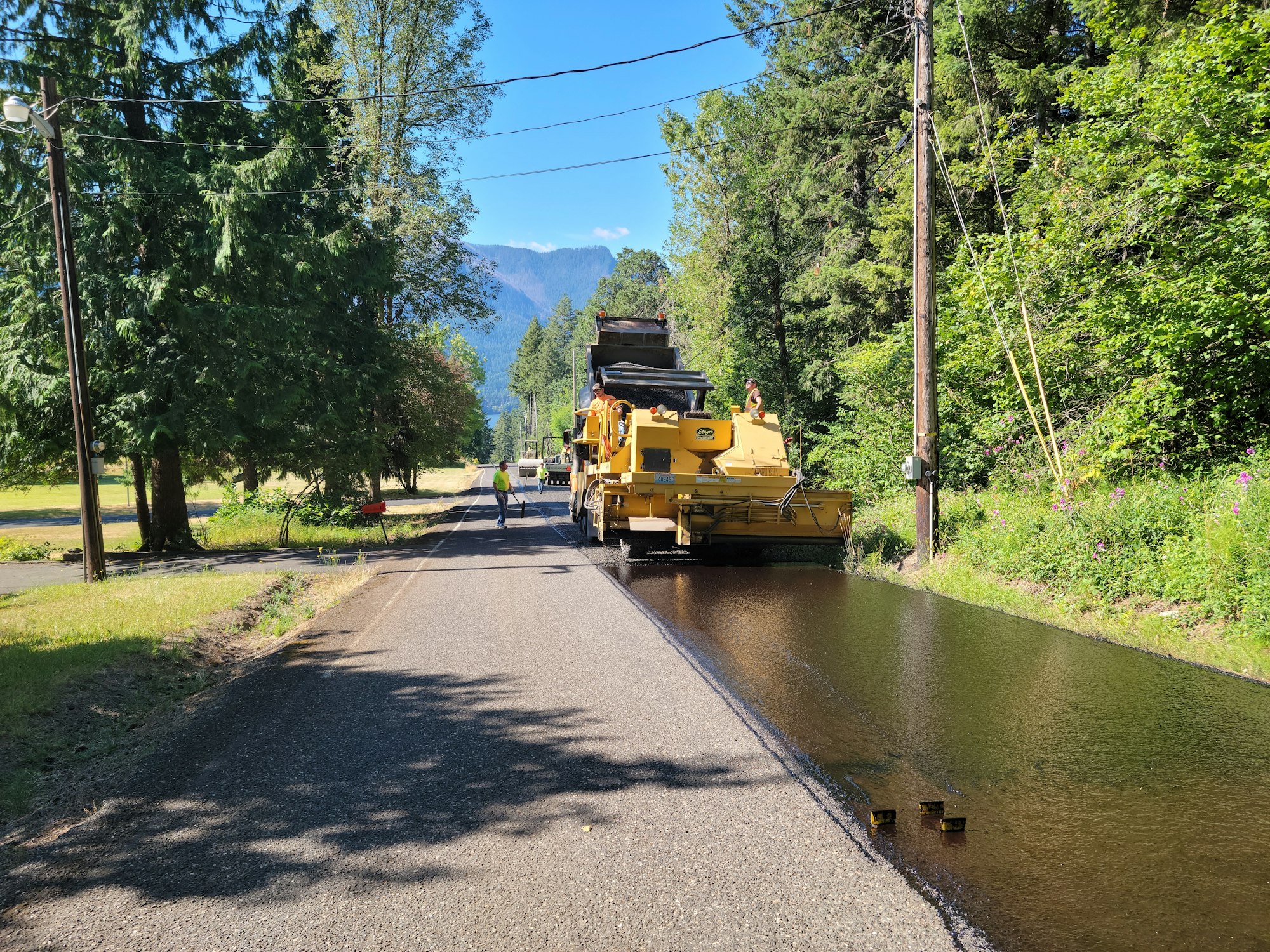
Buying connections from different suppliers does not establish that the physical routes are independent. Somewhere beyond the facility fence, those services may pass through the same duct, bridge or building entrance, creating a common exposure.
The operating distinction
Network service is a chain of physical assets and operational arrangements. Separate billing relationships can sit on shared infrastructure. Route diversity therefore asks where the cables actually travel and which crossings, access points and equipment rooms they share. Logical paths alone cannot answer every physical question.
The same reasoning applies to restoration plans. An alternate service that survives one local cable fault may still be affected by a wider event. Naming the scenario avoids an all-or-nothing conversation about whether a network is diverse.
A practical example
Imagine two connections that enter a campus from opposite sides but meet at the same nearby road crossing. A fault at that crossing could affect both services. The separate entrances remain useful, but they do not remove that shared section of the route.
Questions worth asking
Different contracts can provide useful commercial options without proving physical independence. Reading the route evidence separately helps identify the actual benefit of the arrangement and the remaining shared exposure that needs another response.
- Which physical segments are shared outside the property boundary?
- When was the route information last confirmed with the providers?
- What restoration options remain if that common segment is unavailable?
What the evidence supports
Route documentation can be incomplete or subject to confidentiality limits. It can also become stale after changes. The practical goal is to establish the important shared risks and the evidence available, rather than assume that a second contract eliminates every possible network interruption.
A route sketch should distinguish confirmed information from an assumption or a supplier statement awaiting clarification. It can then show the important uncertainty without revealing sensitive route details publicly. The point is to make procurement and operating discussions more precise: which kind of damage is covered, which common dependencies remain and what evidence would justify a stronger claim. That is more useful than assuming that different service names imply different physical journeys.
Diversity is a property of the complete path, not simply the number of names on the invoices.
Quick check
How much did you catch? Tap a question to see the answer.
1. Do two suppliers guarantee independent routes?
Answer: No. They may share a duct, bridge or building entrance.
2. What does route diversity ask?
Answer: Where the cables physically travel and which crossings they share.
3. What could two entrances on opposite sides still share?
Answer: The same nearby road crossing.
How Shared Segments Usually Hide
Common exposure rarely announces itself on a contract. It tends to sit in places that are easy to overlook because they are outside the property and outside the day-to-day attention of the facility team.
- Shared conduit or duct banks. Different providers may lease space in the same underground structure along a road.
- Bridge and rail crossings. Physical geography often funnels routes toward a small number of practical crossing points over rivers, highways or rail lines.
- Common meet points. Carriers can hand traffic off in the same nearby building or cabinet before it reaches the facility.
- Resold or leased capacity. One supplier may carry traffic over another supplier’s fiber, so two names on two invoices can describe one physical cable.
- The same building entrance. Even when routes are separate for miles, they may converge on a single entrance room or cable vault.
A Practical Route Review, Step by Step
Facility teams and buyers can approach route diversity as a structured review rather than a yes-or-no question.
- Request route information from each provider. Ask for the level of detail they are able to share, recognizing that some route data is confidential.
- Mark known convergence points. Identify crossings, meet points, entrances and any segments where the routes appear to run near each other.
- Label the quality of each claim. Separate confirmed information from provider statements awaiting verification and from assumptions.
- Name the scenarios. Consider a single cable cut near the site, construction damage along a shared road, a bridge closure and a problem in a shared equipment room.
- Map restoration options to each scenario. Decide which services would remain available and which would require a separate response.
- Set a refresh date. Routes change when providers reroute, rebuild or sell assets. Agree on how often the information will be confirmed again.
Common mistakes
One mistake is accepting a provider’s diversity label without asking what it covers. Another is checking diversity once at contract signing and never again. A third is focusing entirely on the long-haul portion of a route while ignoring the last stretch near the facility, where excavation work is often most likely to occur. A fourth is assuming that a wireless or alternate technology backup has no shared dependency, when it may rely on the same power, building or tower infrastructure.
What This Means for Businesses Relying on Connectivity
For organizations that depend on a data center or cloud region, network diversity is part of the resilience they are buying, whether or not they negotiate it directly. A provider that can explain its known shared exposures clearly is usually giving a more honest picture than one that simply states its routes are diverse. For readers following infrastructure companies, route quality is one of the less visible factors behind service reliability, and it rarely appears in a headline.
The most useful diversity statement describes which failures the arrangement is expected to survive and which it is not.
Questions Readers Ask
Why do providers keep route details confidential?
Detailed route maps can create security concerns and may be commercially sensitive. Buyers can often obtain enough information to assess shared risk under appropriate agreements.
Is physical diversity always worth the cost?
It depends on how much an interruption would cost the business and which scenarios matter most. The decision benefits from naming the risk rather than buying diversity as a general label.
Can two routes ever be fully independent?
Complete independence is difficult to prove. The practical aim is to reduce the most likely and most damaging shared exposures and to know which ones remain.
How does excavation risk relate to fiber?
Buried cable can be damaged during digging for roads, utilities or construction. Shared corridors mean one digging accident can affect more than one service.
AI infrastructure explainers and news on iPhone, iPad and Apple Watch.

Stormwater Planning Starts Before the Data Hall Opens

Who Pays for AI’s Electricity? The Data Center Fight Reaches the Senate

Fiber Repair Slack Is Part of the Restoration Plan

First Response and Full Completion Are Different Inference Questions

Transformer Lead Times Are Becoming a Data-Center Schedule Risk

Gas Turbines on Data-Center Campuses

Water Use and Dry Coolers: The Tradeoff AI Sites Cannot Avoid

FERC’s Large-Load Orders: The November 16 Grid Deadline Behind the AI Build-Out
Stormwater Planning Starts Before the Data Hall Opens
Who Pays for AI’s Electricity? The Data Center Fight Reaches the Senate
Fiber Repair Slack Is Part of the Restoration Plan
First Response and Full Completion Are Different Inference Questions
-
 Power & Grid1 month ago
Transformer Lead Times Are Becoming a Data-Center Schedule Risk
-
 Power & Grid1 month ago
Gas Turbines on Data-Center Campuses
-
 Cooling2 months ago
Water Use and Dry Coolers: The Tradeoff AI Sites Cannot Avoid
-
 Power & Grid1 month ago
FERC’s Large-Load Orders: The November 16 Grid Deadline Behind the AI Build-Out
-

 Compute & Silicon2 months ago
GPU Supply Chains: How AI Hardware Gets Made, Moved, and Bottlenecked
-

 Power & Grid1 month ago
Battery Storage at AI Sites
-

 Capital & Backlog1 month ago
AI Infrastructure’s Rough Week: Chips Fall 6.7% as Meta Lifts Capex Floor
-

 Cooling1 month ago
Liquid-Cooling Leak Detection and Reliability