
Capacity & Sites
Data Centers and Water: Separating Real Concerns From Myths
Cooling can use a lot of water, or very little, depending on design. Here is how data center water use works and what questions communities ask.


Water has become one of the most debated aspects of data center growth. Some facilities use large volumes for cooling, while others use almost none. The difference comes down to design choices, climate and trade-offs with energy use.
Why data centers need cooling at all
Nearly all the electricity a server uses turns into heat. If that heat is not removed, equipment slows down or fails. Data centers remove heat in two broad ways: by moving it into the air with fans and heat exchangers, or by using water, either directly or indirectly, to carry it away.
How water gets used
Water use typically falls into a few categories:
- Evaporative cooling, where water evaporates to cool air or equipment, consuming the water in the process
- Cooling towers, which also rely on evaporation and periodically discharge water with concentrated minerals
- Closed-loop systems, where water or other fluids circulate repeatedly with little loss
- Indirect water use at power plants that generate the electricity a facility consumes
Evaporative methods tend to be energy efficient but water intensive. Air-cooled and closed-loop systems use much less water on site but may require more electricity, especially in hot climates.
Myth versus fact
Myth: every data center drains local water supplies. Fact: water use varies enormously by design, and some facilities are built specifically to use very little.
Myth: closed-loop liquid cooling for AI chips means no water impact. Fact: the loop that touches chips may be closed, but the heat still has to go somewhere, and the systems that reject it to the outdoors may or may not use water.
Myth: water use is always disclosed. Fact: reporting practices vary. Some operators publish water metrics, often expressed as water usage effectiveness, while others share little at the facility level.
What communities ask about
Local discussions often focus on whether a facility will draw from a municipal system, a private well or reclaimed water; how much it will use during peak summer demand; and whether it will discharge wastewater. Using treated wastewater or non-potable sources is one approach that can reduce competition with drinking water supplies, where it is available.
Finding reliable information
Water permits, utility agreements and environmental filings are often public records. Local water utilities and state environmental agencies can explain how large users are approved in your area. Those sources are usually more reliable than broad national estimates, because water impacts depend so much on local conditions and on the specific cooling design chosen.
It also helps to ask about timing. A facility’s water draw may be modest most of the year and peak during hot spells, which is exactly when local systems are under the most strain. Questions about summer peaks are often more revealing than annual totals.
This article is general education about how the industry and financial reporting work. It is not investment advice and does not recommend buying or selling any security. For decisions about your own money, talk to a licensed financial advisor.
The Energy and Water Trade-Off in Plain Terms
One of the least understood aspects of data center cooling is that saving water and saving electricity often pull in opposite directions. A simple comparison helps.
- An evaporative design uses the cooling effect of water turning into vapor. It can remove heat with relatively little fan and compressor energy, especially in dry climates, but it consumes water continuously during warm weather.
- An air-cooled or dry design pushes heat into the outdoor air through radiators and fans, sometimes with mechanical chillers. It uses very little water on site, but on hot days it may need considerably more electricity.
Because generating electricity can itself consume water at many types of power plants, a design that saves water on site may increase water use somewhere else, depending on the local power supply. That is why careful analyses look at both the facility and its electricity source.
Many modern facilities use hybrid systems that run dry most of the year and switch to evaporative assistance only during the hottest periods, aiming to balance the two.
Understanding Water Metrics
When operators report water use, they often use a measure called water usage effectiveness, or WUE. It generally relates the water a site uses to the energy consumed by its IT equipment, commonly expressed in liters per kilowatt-hour. A few cautions help when reading it:
- Check what is included. Some figures cover only on-site water; others try to include water used to generate the electricity.
- Look at the time frame. Annual averages can hide summer peaks.
- Note the water source. A liter of reclaimed water has a different local impact than a liter of drinking water.
- Distinguish withdrawal from consumption. Water withdrawn and later returned differs from water evaporated and lost to the local system.
Questions to Ask About a Proposed Facility
- What cooling design is planned, and how does it change in the hottest weeks of the year?
- Where will the water come from: the municipal system, wells, reclaimed water or another source?
- What is the expected peak daily use, not just the annual total?
- Will the facility discharge water, and where will it go?
- Are there limits or conditions in the water agreement during droughts or emergencies?
- Will the operator report water use publicly after opening?
Common Misreadings
- Comparing totals across very different climates. A facility in a hot, dry region and one in a cool, humid one face very different cooling needs.
- Treating national estimates as local facts. Broad averages say little about any one site’s design or water source.
- Assuming liquid cooling means no water. Liquid cooling describes how heat leaves the chips, not necessarily how it leaves the building.
- Ignoring construction. Building a large campus uses water for activities such as dust control and concrete work, separate from operations.
Questions Readers Ask
Why don’t all data centers use dry cooling?
In hot climates, dry cooling can require much more electricity, and power is often the scarcest resource. Operators weigh water, energy, cost and local conditions together.
Is reclaimed water safe to use for cooling?
Treated wastewater is used for cooling in a variety of industries. It often requires additional treatment to protect equipment, and its availability depends on local infrastructure.
How can I find out about water use at a specific site?
Start with the local water utility, the planning department and state environmental agency records, which may include permits, agreements and public comments.
Does water use matter for people following the industry?
Yes. Water availability and community concerns increasingly influence where facilities can be built and which cooling designs are chosen.
Latest stories
View all


Capacity & Sites
Remote Support Depends on More Than a Telephone Number
A support contact can be reachable while the organization still lacks a workable repair path. The useful question is whether the right person can understand the fault, gain approved access and obtain the needed equipment when the primary team is absent.

Photo: Emmanuel Ikwuegbu / Unsplash
A support contact can be reachable while the organization still lacks a workable repair path. The useful question is whether the right person can understand the fault, gain approved access and obtain the needed equipment when the primary team is absent.
The operating distinction
Maintenance support crosses several boundaries: the operator, equipment supplier, security process and local service personnel. Each boundary can introduce a delay. A complete arrangement identifies the information to collect, the permissions needed and the point at which remote diagnosis becomes a site visit.
The same support chain should explain how a repair is handed back to operations. A supplier may report that its component is healthy while the broader service still needs checking. Closing the supplier ticket and accepting the restored service are related but separate decisions.
A practical example
Consider a hypothetical fault during a holiday weekend. A vendor answers promptly but needs logs that the available staff cannot access. The response time looks good on paper, yet the repair remains stalled. Preparing access and evidence collection can matter as much as naming an escalation contact.
Questions worth asking
Support should be assessed as a sequence of authorized actions, not one response-time promise. A reachable specialist cannot complete a repair if the required evidence, permissions or physical access remain unavailable to the team.
- Can the available shift collect the information the supplier needs?
- Who approves and supervises any remote connection to the site?
- What triggers a physical visit when remote support cannot resolve the fault?
What the evidence supports
Remote access also creates security responsibilities. Faster access is not a reason to remove approvals or share credentials informally. The aim is an authorized process that works under pressure, with the minimum appropriate permissions and a record of what changed.
A useful preparation exercise follows one plausible fault from the first alert through the evidence request, approval and final service check. It can expose a missing permission or an unclear ownership boundary without causing an actual interruption. The result should be a short set of corrected responsibilities and contacts, rather than another general promise that support will be available when somebody needs it.
Support readiness means a usable chain from first contact to diagnosis and authorized action.
Quick check
How much did you catch? Tap a question to see the answer.
1. Is a reachable support number enough?
Answer: No. The right person also needs approved access, the needed equipment and enough fault information.
2. What can stall a repair even when the vendor answers fast?
Answer: Staff who can’t access the logs the vendor needs.
3. Is closing the supplier ticket the same as accepting the service?
Answer: No. They’re related but separate decisions.
Preparing the Support Chain Before It Is Needed
Most of the work that makes remote support effective happens well before a fault. The preparation can be organized around the questions a supplier will ask in the first minutes of a call.
- Identify the equipment precisely. Keep model information, serial references and configuration details where the on-shift team can find them without the primary engineer.
- Agree on the evidence package. Ask each key supplier which logs, readings and screenshots they usually request, and confirm that the available shift can collect them.
- Pre-approve the access process. Define how a remote session is requested, approved, supervised and closed, including who can authorize it outside normal hours.
- Plan the physical route. Confirm how a field technician is admitted to the site, escorted and given access to the equipment area.
- Locate parts and tools. Know which spares are held on site, which are held by the supplier and how quickly each can arrive.
- Define the return to service. Agree on the checks the operator will perform before accepting a repair as complete.
A support readiness checklist
- Current supplier contacts and escalation levels, confirmed recently
- Contract coverage hours and what they include
- Named roles that can approve remote and physical access after hours
- A documented method for collecting and transferring logs securely
- Site access instructions for visiting technicians
- A post-repair verification list for the affected service
Common Gaps That Stall a Repair
Support arrangements tend to fail at the boundaries between organizations rather than inside them. A supplier may be responsive while the site cannot grant access quickly. A security team may be available while nobody on shift knows which logs to collect. A field technician may arrive while the spare part is held at a distant depot. Each organization performs its part, and the repair still waits.
Another frequent gap is the difference between coverage on paper and coverage in practice. A contract may promise around-the-clock response, but the response may consist of an initial callback rather than an engineer able to diagnose the specific equipment. Clarifying what the first response actually provides helps set realistic expectations for an evening or holiday incident.
Common mistakes
Sharing credentials informally to speed up a session can leave a lasting security exposure. Closing an incident when the supplier ticket closes can leave the wider service untested. Relying on one engineer who knows every supplier relationship creates a single point of failure in the support chain itself.
What This Means for Organizations Buying Services
Businesses that rely on a facility or a managed service can ask how support works outside normal hours, not just whether a support line exists. Questions about access approvals, spare parts and verification after repair reveal more about real readiness than a stated response time. For readers following infrastructure companies, the quality of these arrangements sits behind reliability claims even though it rarely appears in announcements.
A response time measures how quickly someone answers. Restoration depends on everything that has to happen next.
Questions Readers Ask
Is remote support less secure than an on-site visit?
Not inherently. Both carry security responsibilities. A well-governed remote session with approval, supervision and logging can be appropriate.
How often should supplier contacts be verified?
Regularly, and after any change in contracts, staff or supplier organization.
Who decides when a site visit is needed?
Usually a combination of the supplier’s diagnosis and the operator’s judgment, guided by criteria agreed in advance.
What is the most overlooked part of support readiness?
Often the evidence collection step, because it depends on staff who may not usually handle that equipment.
AI infrastructure explainers and news on iPhone, iPad and Apple Watch.
Capacity & Sites
A Powered Phase Is Not the Same as a Finished Campus
A campus can be large on a plan while only part of it is ready for equipment. Describing capacity accurately means separating land, buildings, energized systems and space that has actually passed the required operational checks.
Photo: Artem Labunsky / Unsplash
A campus can be large on a plan while only part of it is ready for equipment. Describing capacity accurately means separating land, buildings, energized systems and space that has actually passed the required operational checks.
The operating distinction
Development proceeds through dependencies. A building shell may be complete before power equipment is available. A powered hall may still need cooling validation or customer fit-out. Later phases can depend on work that has not begun. Combining those stages into one number hides the practical delivery question.
The distinction also changes how readers interpret a ribbon-cutting announcement or construction photograph. A completed exterior shows progress, but it cannot establish the state of the systems inside. The story needs the operational milestone behind the image.
A practical example
Consider a hypothetical site with one operating hall and several planned additions. The available service today belongs to the operating portion. Future expansion may be credible and valuable, but it remains subject to its own infrastructure, permissions, construction and handover milestones.
Questions worth asking
A delivery claim should name the condition that makes a phase useful. Visible construction progress, equipment arrival and operational acceptance each contribute evidence, but none should silently take the place of the others.
- Which portion is energized and able to support its stated load?
- What acceptance work remains before a customer can use it?
- Which later phases depend on additional off-site infrastructure?
What the evidence supports
A phase label is useful only when its meaning is stated. Terms such as ready, commissioned and delivered can refer to different contractual or technical boundaries. A careful account names the boundary and avoids treating a future milestone as an accomplished fact.
A phased table can record the handover boundary, the remaining dependency and the date of the latest update for each area. When a phase advances, it moves into the appropriate category instead of appearing in both the planned and delivered totals. That preserves a coherent account over time and lets the reader understand real progress without pretending that every part of a developing campus reaches readiness together.
Keep operating capacity, near-term delivery and longer-term plans in separate columns before combining the story.
Quick check
How much did you catch? Tap a question to see the answer.
1. What should accurate capacity descriptions separate?
Answer: Land, buildings, energized systems and space that has passed operational checks.
2. What can’t a completed exterior photo establish?
Answer: The state of the systems inside.
3. Which part of a phased site offers service today?
Answer: Only the operating portion.
A Vocabulary for Phase Status
Much confusion about campus capacity comes from words that sound precise but carry different meanings in different contexts. Agreeing on a working vocabulary before reading an announcement helps keep the stages distinct. The following terms are a general guide, not a contractual standard, and any particular agreement may define them differently.
- Planned. The phase exists in a development concept or permit application. Land, power and equipment may not yet be secured.
- Under construction. Physical work has started, but the building systems are not yet able to support customer load.
- Energized. Power is available to the phase. This alone does not confirm that cooling, controls and protection systems have been validated.
- Commissioned. Systems have been tested against defined criteria. The scope of that testing matters and should be stated.
- Handed over. Responsibility has passed from the construction party to the operator or customer under a defined boundary.
- In service. Customer equipment is installed and running within the phase.
Reading a Capacity Announcement Step by Step
When a developer or operator describes a campus, a reader can work through the claim in a consistent order.
- Find the unit. Determine whether the figure refers to land area, building area, utility power, power available for equipment or something else.
- Find the stage. Identify which portion of the figure is in service today and which is planned or under construction.
- Find the dependencies. Look for references to utility upgrades, substations, transmission work, permits or equipment deliveries that later phases rely on.
- Find the date. Note when the status was last updated, since construction moves and older statements can linger in later coverage.
- Find the boundary. Ask what event moves a phase from one category to the next and who confirms it.
Common mistakes
The most common error is adding planned and operating capacity together and quoting the total as if it existed today. Another is treating a groundbreaking or topping-out ceremony as a delivery milestone. A third is assuming every phase will follow the same timeline as the first, when later phases may depend on infrastructure that is not yet secured. Each of these makes the campus look further along than the evidence supports.
What This Means for Readers Following the Industry
Large campus figures are often used to describe ambition and long-term potential, which can be entirely legitimate. The useful habit is to keep three separate pictures in mind: what is operating now, what is near delivery with its remaining dependencies, and what is a longer-term plan. Each picture carries a different level of certainty. A reader who keeps them apart can follow progress over successive updates and notice when a phase genuinely advances or when a timeline shifts.
A campus is delivered in parts, and each part earns its status separately.
This is general education about interpreting infrastructure announcements. It is not a view on any company, and readers making financial decisions should speak with a qualified financial professional.
Questions Readers Ask
Why would a developer announce the full campus size early?
Early announcements can support permitting, utility planning, financing and customer discussions. The full size describes intent, while delivery happens in stages.
Does an energized building mean customers can move in?
Not by itself. Cooling, controls, fire protection and fit-out may still need to be completed and accepted.
What usually limits later phases?
Often utility power, equipment supply, permits and construction capacity. The specific constraint varies by site.
How can a reader track progress over time?
By noting the status of each phase in successive updates and watching for phases that move between categories, rather than relying on the headline total.
AI infrastructure explainers and news on iPhone, iPad and Apple Watch.
Capacity & Sites
A Power Station Becomes an AI Campus: Inside the $27 Billion Drax Plan
Drax, Brookfield and Radiant want to build more than a gigawatt of AI data center capacity at a North Yorkshire power station. Here is what is real, what is planned, and why power sites are suddenly prized.
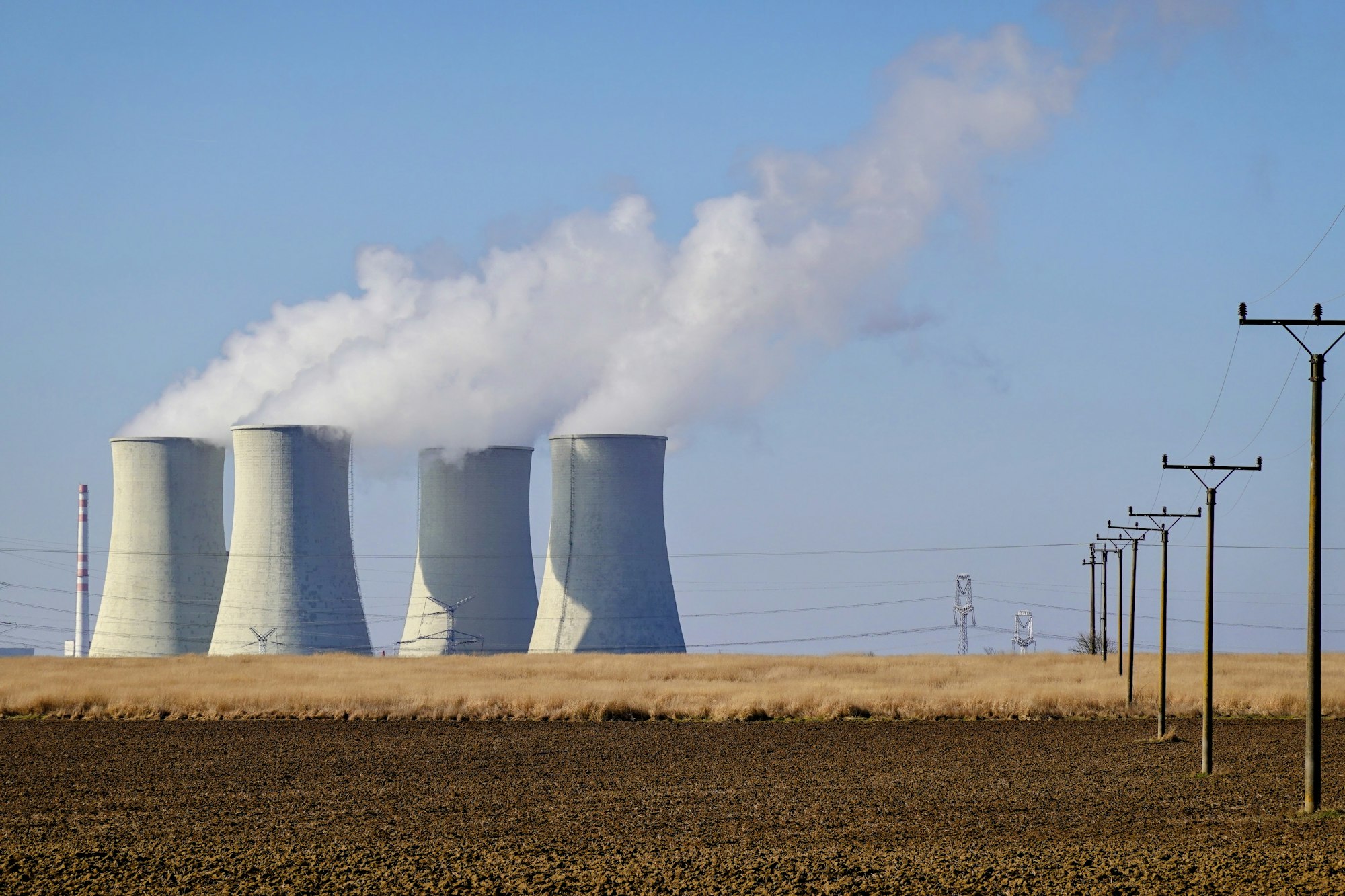
Drax shares jumped more than 8% on Tuesday after the British power company said it is teaming up with Brookfield and AI infrastructure platform Radiant to develop a data center campus at Drax Power Station in North Yorkshire, according to CNBC and Investing.com. The partners say the project could attract more than £20 billion, about $27 billion, of investment and grow beyond one gigawatt of capacity.
Who brings what
- Drax: the land, the power and grid access through the station’s existing 4-gigawatt connection.
- Brookfield: capital, through a joint venture with Qatar’s Qai.
- Radiant: AI infrastructure expertise.
The plan, phase by phase
The project is planned in three phases. The first targets up to 100 megawatts, with commercial operations aimed for early 2028 and an estimated initial investment of £2.5 billion. That first phase still needs planning, regulatory and network approvals, and the partners have not yet made a final investment decision.
Why this matters
As we have covered in our power explainers, the hardest part of building AI capacity is often the grid connection, not the chips. A site that already has a very large connection and a power plant on it skips one of the longest waits in the industry. That is why existing power stations are becoming some of the most sought-after real estate in the AI build-out.
The caution
Analysts were split. JPMorgan said the deal could lift how investors value Drax’s data center ambitions. Citi noted that very little financial detail has been released and that the announcement reads more like a memorandum of understanding than a firm contract. Big headline numbers on day one are not the same as concrete poured.
BOSSTOX publishes educational content, not investment advice.
Quick check
How much did you catch? Tap a question to see the answer.
1. What does Drax contribute to the project?
Answer: The land, the power and grid access through its 4-gigawatt connection.
2. How large is the first phase, and when could it start operating?
Answer: Up to 100 megawatts, targeting early 2028.
3. Why did Citi urge caution?
Answer: Little financial detail was released and no final investment decision has been made, so it reads more like an MOU than a contract.
Going Deeper: Reading a Headline Number Like This One
Figures such as “could attract more than £20 billion” and “beyond one gigawatt” describe a long-term ambition across several phases, not money committed on announcement day. As of early November 2026, a few habits help put a campus announcement of this kind in context.
- Separate the phases. The first phase, up to 100 megawatts, is a small fraction of the full ambition. Later phases depend on demand, approvals and financing that have not yet been arranged.
- Note the word “could.” Investment that “could” be attracted is a projection by the partners. It is not a contract or a final investment decision.
- Look for the decision points. Planning permission, regulatory approvals, network approvals and a final investment decision are each separate milestones. Each one is a moment when the project’s shape can change.
- Watch how capacity is measured. A connection’s size and the power a campus actually draws are different things. Grid capacity at a site may also be shared with existing uses.
Why Power Stations Appeal to Data Center Developers
Earlier BOSSTOX explainers on interconnection queues and brownfield sites describe why existing power infrastructure is so valuable. A large station typically sits beside high-voltage transmission built to export a great deal of electricity. Reusing that connection can, in principle, avoid some of the longest waits in the development process. Such sites also tend to offer large parcels of industrial land and established access routes.
That does not mean the conversion is simple. Even with an existing connection, grid operators and regulators generally need to study how a large new load would interact with the system, especially if generation on the site and demand from a campus are expected to coexist. The original article notes that network approvals are still required for the first phase.
How the partner structure divides roles
The roles described above follow a common pattern in infrastructure deals: one party brings the site and its power, another brings capital and a third brings operating or technical expertise. Each typically shares in the returns in proportion to what it contributes and the risks it takes. Until definitive agreements are published, the exact split of costs, ownership and returns is unknown, which is part of why some analysts urged caution.
What to Watch From Here
- Definitive agreements. Whether the partners move from an announced collaboration to binding contracts with disclosed terms.
- Planning and regulatory filings. Applications to local and national authorities often contain detail on power use, cooling, water and construction schedules.
- Grid approvals. Progress on the network permissions needed for the first phase.
- Tenant commitments. Whether a customer signs on to use the capacity, which would strengthen the case for financing.
- Final investment decision. The point at which the partners commit to building, and the clearest signal that the first phase is moving forward.
- Timeline updates. Any change to the early 2028 target for commercial operations.
Questions Readers Ask
What is a memorandum of understanding? It is a document in which parties outline their intention to work together. It is usually not a binding commitment to complete a deal, which is why it differs from a firm contract.
Why would a share price jump on a non-binding announcement? Prices reflect expectations. Investors may see added value in the site’s potential even before details are final, though expectations can shift as more information emerges.
Why do analysts disagree on the same announcement? They weigh different things. One may focus on the strategic value of the site’s connection and the quality of the partners, while another focuses on the absence of financial terms and binding commitments. Both views can be reasonable at the same time, and later disclosures usually narrow the gap.
Does a 100-megawatt first phase mean the project is small? It is modest compared with the full ambition, but phasing is standard for large campuses, as earlier BOSSTOX coverage explains. Each phase is typically tied to power availability and demand.
Markets, power and the companies building AI infrastructure, on iPhone, iPad and Apple Watch.

A Coolant Distribution Unit Needs Its Own Power-Loss Story

The Control Plane Can Be a Shared Dependency Across Separate Systems

A Maintenance Window Changes the Meaning of Redundancy

Remote Support Depends on More Than a Telephone Number

Transformer Lead Times Are Becoming a Data-Center Schedule Risk

Gas Turbines on Data-Center Campuses

Water Use and Dry Coolers: The Tradeoff AI Sites Cannot Avoid

Battery Storage at AI Sites
A Coolant Distribution Unit Needs Its Own Power-Loss Story
The Control Plane Can Be a Shared Dependency Across Separate Systems
A Maintenance Window Changes the Meaning of Redundancy
Remote Support Depends on More Than a Telephone Number
-
 Power & Grid1 month ago
Transformer Lead Times Are Becoming a Data-Center Schedule Risk
-
 Power & Grid1 month ago
Gas Turbines on Data-Center Campuses
-
 Cooling2 months ago
Water Use and Dry Coolers: The Tradeoff AI Sites Cannot Avoid
-
 Power & Grid1 month ago
Battery Storage at AI Sites
-

 Compute & Silicon1 month ago
GPU Supply Chains: How AI Hardware Gets Made, Moved, and Bottlenecked
-

 Power & Grid4 weeks ago
FERC’s Large-Load Orders: The November 16 Grid Deadline Behind the AI Build-Out
-

 Capital & Backlog4 weeks ago
AI Infrastructure’s Rough Week: Chips Fall 6.7% as Meta Lifts Capex Floor
-

 Cooling4 weeks ago
Liquid-Cooling Leak Detection and Reliability