
Capital & Backlog
What the TGI Fridays Wind-Down Teaches About Whole-Business Securitization
TGI Fridays’ operating company is being liquidated while its brand and 69 franchised U.S. units carry on. What the securitization saga teaches investors.

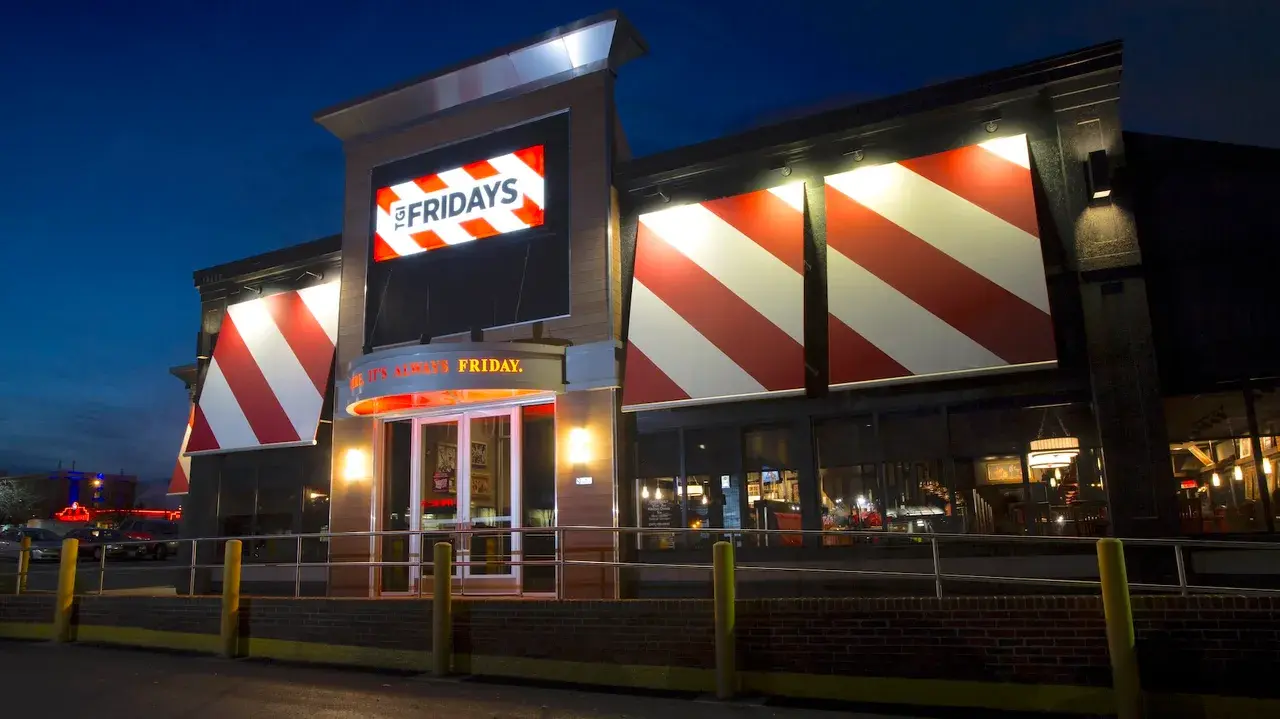
The liquidation of TGI Friday’s Inc., approved by a Texas bankruptcy judge in July 2026, ends the company that ran the chain for decades while the brand, its royalty stream and 69 franchised U.S. restaurants carry on under new management, a split that shows how a whole-business securitization is built to work and who absorbs the losses when it does.
How the structure was built
A whole-business securitization moves a franchisor’s most dependable cash flows, its franchise royalties, license fees and intellectual property, into special-purpose entities designed to be insulated from the operating company’s bankruptcy. Those entities issue bonds against the cash flows. The operating company stays outside, earning a management fee for collecting royalties and supporting franchisees. Domino’s and Subway are among the brands that have used the structure, Restaurant Business noted.

TGI Fridays joined them in February 2017 with TGIF Funding LLC Series 2017-1, three years after Carlson sold the chain to Sentinel Capital Partners and TriArtisan Capital in a deal valued at more than $800 million including debt, according to CNBC and FSR magazine. Kroll Bond Rating Agency rated the 2017 notes BBB and S&P assigned BBB-, according to Inside Mortgage Finance. The collateral included license agreements, existing and future franchise agreements, royalties on company-operated restaurants and intellectual property, KBRA said in November 2024.
The deal’s size is reported differently. Inside Mortgage Finance put it at $450 million; American Banker’s Asset Securitization Report put the original issuance at $425 million, made up of a term note and a variable funding note; and Restaurant Dive and The Dallas Morning News described a $375 million bond, the size of the main term note.
The triggers that tightened
Securitizations of this kind contain early-warning triggers, and TGI Fridays tripped one in mid-2020. Trailing 12-month systemwide sales fell to $1.4 billion, below a $1.5 billion floor, putting the notes into rapid amortization, American Banker reported. KBRA said the deal stayed in rapid amortization from the second quarter of 2020 onward. In that state, cash left after senior fees goes to retire the notes before the operator sees any.
Coverage eroded steadily. American Banker reported a debt service coverage ratio of about 2.2 times at issuance and about 1.6 times in 2020. KBRA put it at 1.06 times in the third quarter of 2024 and rated the remaining notes B, down from BBB at issuance. Some principal was retired early, including with proceeds from the sale of permanent retail licensing rights to Kraft Heinz in 2024, Restaurant Business and The Dallas Morning News reported. By November 2024, KBRA said, only the Class A-2 note remained outstanding, at a note factor of about 36.7 percent.
The manager termination
On Sept. 3, 2024, the securitization’s control party declared a manager termination event and removed TGI Fridays as manager, KBRA said. The trustee, Citibank, issued the termination, according to Restaurant Business and The Dallas Morning News. FTI Consulting, the back-up manager, took over royalty collection and franchise support. Kroll described it as the first manager termination in a whole-business securitization since the 2008 financial crisis, Restaurant Business and Restaurant Dive reported.
The trigger was not a missed payment. Interest on the notes continued to be paid on time, KBRA and Restaurant Dive reported. KBRA said the company failed to deliver a required report from independent auditors or the back-up manager by the deadline. S&P, as cited by Restaurant Business, pointed to several factors, including a roughly $2 million overpayment of management fees that had already been spent on overdue vendor bills.
The consequences were immediate. Hostmore, the U.K. franchisee that had agreed to a $220 million all-share combination, abandoned the deal on Sept. 9 after the American group lost control of TGIF Funding, Restaurant Online reported, and entered administration on Sept. 18.
Chapter 11 for the operator only
TGI Friday’s Inc. filed for Chapter 11 on Nov. 2, 2024, in the Northern District of Texas. The case covered 39 company-run restaurants. The franchised restaurants and the brand’s intellectual property, held by a separate franchisor entity, were not part of it, the Associated Press and Nation’s Restaurant News reported.
The operator’s own funded debt was small next to the securitization: Restaurant Business reported $37 million at filing, while Bloomberg Law put it at about $47 million. A larger consumer-facing obligation was $49.7 million in outstanding gift cards, which the judge allowed the company to keep honoring, according to Fortune and PaymentsJournal.
The company then sold or closed its stores. MERA Corp. paid $34.5 million for nine restaurants in January 2025, FSR and Restaurant Business reported. Of the 39 company-owned restaurants, 28 went to franchisees and 11 closed, according to the franchise disclosure document summarized by Fast Company. On July 23, 2026, Judge Stacey G. Jernigan approved a consensual liquidating plan, Bloomberg Law reported; Nation’s Restaurant News dated the confirmation July 24. A post-confirmation trust will distribute remaining assets to creditors, and the debtors’ counsel, Foley & Lardner, said all major creditor groups supported the plan.
Where the brand landed
The brand is now run by Sugarloaf, the group led by former chief executive Ray Blanchette, who returned in 2025. NRN and Fast Company describe Sugarloaf as the owner. The U.K. administrator Interpath, in a January 2026 announcement, called it “the manager and custodian of the worldwide TGI Friday brand.” Public reporting reviewed for this article does not detail how the securitization noteholders’ claims were resolved or what they recovered.
Blanchette has described the company as operating under a debt-free structure, Restaurant Dive reported in 2025. The U.S. system is now entirely franchised, with 69 restaurants listed in October, down from 269 at the end of 2023. The amended disclosure document projects no U.S. openings in 2026, while a Sept. 29 development deal with Bliss Bites LLC calls for five New York restaurants over three years.
The BOSSTOX Take
TGI Fridays is the clearest recent case of a whole-business securitization doing exactly what it promised bondholders and little more. The royalty stream kept paying interest through a manager termination and a Chapter 11 filing, and the brand survived intact. The operating company, which carried the restaurants, the leases, the gift cards and the employees, absorbed the losses. Two lessons stand out. First, the binding constraints were contractual and administrative rather than a payment default: a sales trigger in 2020 diverted cash away from the operator for four years, and a reporting lapse or fee dispute was enough to hand control to a back-up manager. Second, asset-light does not mean risk-light. The structure concentrates value in the brand and pushes fragility onto the operator and franchisees, whose closures shrink the royalty base the bonds depend on. For investors, the useful questions are less about headline leverage and more about who controls the cash, what trips the triggers and how healthy the franchisees are.
This article is for informational purposes only and is not investment advice.
What it means for you
- Track the triggers: in any securitized franchisor, compare systemwide sales with rapid-amortization thresholds and the debt service coverage ratio with cash-trap levels, which rating agencies disclose.
- Watch the manager: fee calculations and reporting deadlines matter, because a compliance failure can shift control to a back-up manager while payments are current.
- Count units, not just royalties: franchise closures, like the nine in the TGI Fridays system through September 2026, shrink the collateral.
- Know where the brand lives: when intellectual property sits in a separate entity, an operating-company bankruptcy can leave the brand untouched and the operator’s creditors with little.
- Separate stabilization from growth: a fully franchised structure can stop the bleeding, but growth targets still have to show up in unit openings.
Test yourself
1. What pushed the TGI Fridays securitization into rapid amortization in 2020?
Answer: Trailing 12-month systemwide sales fell to $1.4 billion, below a $1.5 billion threshold, American Banker reported.
2. Who became successor manager after the September 2024 termination?
Answer: FTI Consulting, which had been the deal’s back-up manager.
3. Was the manager termination caused by missed interest payments?
Answer: No; interest kept being paid on time, and KBRA cited a late required report while S&P cited factors including a fee overpayment.
4. Which entity is being liquidated under the July 2026 plan?
Answer: TGI Friday’s Inc., the old operating company; the brand and its franchised restaurants continue under Sugarloaf.
Discussion
- Did the securitization protect the TGI Fridays brand, or hasten the decline of the company that ran it?
- Should a back-up manager be able to take control over a reporting failure while bond payments are current?
- How should investors value an asset-light franchisor whose franchisee count is still shrinking?
From the network
- Boston Made Reader — every story from the family in one free reading app.
- Boston Made Newsroom — regional business and economy coverage, including the TGI Fridays closures in Massachusetts.
- Kingswell Strategic Ventures — strategy, ventures and holdings.
Sources
- Associated Press (via The Intelligencer) — TGI Fridays files for bankruptcy protection as sit-down restaurant struggles continue
- KBRA (via Business Wire) — KBRA comments on TGI Fridays Chapter 11 bankruptcy filing
- Inside Mortgage Finance — TGI Friday’s brings first whole-business securitization of 2017 with $450 million deal
- American Banker (Asset Securitization Report) — TGI Friday’s whole-biz notes downgraded following rapid-amortization trigger
- Restaurant Business — TGI Fridays loses control of most of its assets
- The Dallas Morning News — Dallas-based TGI Fridays management loses control of much of the company’s assets
- Restaurant Dive — TGI Fridays acquisition falls through, bondholders seize assets
- Restaurant Dive — Why TGI Fridays filed for bankruptcy
- Restaurant Online — TGI Fridays owner Hostmore files for administration
- Nation’s Restaurant News — TGI Fridays files for Chapter 11 bankruptcy
- CNBC — Carlson sells TGI Fridays, reportedly for $800M
- FSR magazine — Extraordinary conditions sink TGI Fridays’ $380M sale
- Restaurant Business — TGI Fridays sells 19 restaurants out of bankruptcy
- Bloomberg Law — TGI Friday’s dining chain approved for bankruptcy wind-down plan
- Fortune — TGI Fridays gift cards in Chapter 11
- PaymentsJournal — After the TGI Fridays bankruptcy, a battle over gift cards
- FSR magazine — Former TGI Fridays CEO Ray Blanchette tapped to manage chain’s franchised restaurants
- Fast Company — TGI Fridays store closures: updated list as footprint continues to shrink
- Nation’s Restaurant News — TGI Fridays liquidation plan approved as Chapter 11 winds down
- Foley & Lardner — Foley secures consensual Chapter 11 plan confirmation for TGI Friday’s
- Interpath Advisory — Majority of TGI Friday restaurants across the UK rescued via pre-pack deal
- Restaurant Dive — TGI Fridays CEO says the brand is ready to grow again post-bankruptcy
- FSR magazine — TGI Fridays’ U.S. comeback gains momentum
- PR Newswire — TGI Fridays signs landmark U.S. development agreement
Latest stories
View all
Capital & Backlog
Data-Center REITs and AI Leases
AI leases can expand a data-center REIT’s revenue and backlog, but the investment case depends on power delivery, tenant credit, construction risk, lease structure, and the difference between signed demand and operating rent.

A data-center real estate investment trust is not simply a landlord collecting rent on a warehouse. It owns or finances specialized buildings, electrical infrastructure, cooling systems, land, and development rights. AI demand can make those assets more valuable, but it can also make them more expensive and more concentrated.
The central analytical mistake is to treat a signed AI lease as the same thing as a stabilized, cash-producing property. The lease may be for future capacity. The building may still need power, construction, and tenant equipment. The tenant may have termination rights, expansion options, or conditions that shift risk back to the landlord.
What an AI lease pays for
Traditional colocation leases often charge for dedicated power, space, connectivity, and operating services. An AI lease can require much higher power density, liquid-cooling infrastructure, network capacity, and construction work.
The landlord may fund a shell, electrical plant, cooling distribution, and tenant improvements. The tenant may fund servers and specialized equipment. The contract should say who pays for transformers, generators, coolant loops, repairs, taxes, insurance, and upgrades.
Rent can be quoted by kilowatt, cabinet, square foot, or a combination. A quoted price per kilowatt is not comparable across leases unless the reader knows whether it includes power, cooling, cross-connects, taxes, and operating expenses.
Contracted capacity is not the same as energized capacity
An AI tenant can contract for 100 MW and initially use only 20 MW. The remaining capacity may be scheduled for later phases, subject to utility delivery and construction.
The analyst should separate signed capacity, commenced leases, rent-bearing capacity, energized capacity, and occupied IT load. Each step reduces risk. A property may have attractive contracted demand but little current cash flow if the tenant has not accepted the space.
Digital Realty’s 2025 annual filing describes customer lease payments, operating leases, and arrangements involving data centers contributed to funds. It also notes that many leases reimburse the landlord for some property operating expenses and real estate taxes. That reimbursement structure matters because rising power and maintenance costs may be passed through or absorbed depending on the contract.
Tenant quality and concentration
Hyperscalers offer strong credit, but a lease to a single large customer can create concentration risk. If one tenant controls a large share of a building’s power, a delay or redesign can affect the development schedule.
The contract’s term is only one part of the story. Analyze rent escalators, renewal rights, early termination provisions, security deposits, parent guarantees, expansion options, and the tenant’s ability to defer phases.
A long lease with a creditworthy tenant can support financing. It does not eliminate construction or power risk. The REIT still has to deliver the facility at the agreed specifications and schedule.
AI changes the cost base
High-density AI rooms need more electrical distribution, cooling, and maintenance than conventional cabinets. Liquid cooling adds valves, pumps, heat exchangers, controls, leak detection, and service procedures. Electrical equipment may be oversized to support redundancy and rapid load growth.
The property owner must earn a return on that capital. A lease with a high dollar-per-kilowatt rate may still be unattractive if the landlord spends too much per delivered megawatt or bears the cost of future density upgrades.
The best underwriting shows total development cost per energized megawatt, stabilized rent, operating expense recovery, construction period, financing cost, and tenant-funded equipment. It also shows what happens if the building is delivered six or twelve months late.
Backlog can be a useful but imperfect signal
REITs often report bookings, backlog, leasing activity, or development pipeline. These indicators show demand, but they are not all revenue. A backlog may include options or future phases, and a pipeline may include land that has no utility approval.
Read the definition carefully. Is backlog signed and binding? Is it subject to conditions? Is it counted in megawatts, revenue, or square feet? Does it include contracts that begin in future years?
The most valuable evidence is conversion: signed leases becoming rent commencement, rent commencement becoming occupancy, and occupancy becoming recurring cash flow.
Power is the asset behind the building
A data-center REIT can own a fine building that is commercially stranded if the utility cannot deliver the contracted load. The investor should inspect substation status, interconnection agreements, transformer procurement, utility milestones, and the site’s ability to operate at the promised density.
That is why AI real estate analysis needs an infrastructure lens. The competitive property is not the one with the biggest rendering. It is the one with deliverable power, appropriate cooling, credible tenants, and a lease that allocates risk clearly.
A lease can also change the landlord’s financing profile. If the tenant pays for improvements, the owner may reduce upfront capital but give up some control over future reuse. If the owner funds the full electrical and cooling plant, it may earn a larger return but carry more construction and residual-value risk. The contract should identify acceptance tests, liquidated damages, expansion deadlines, and the treatment of unused power. These clauses determine whether a signed lease is a durable asset or an expensive reservation.
The tenant may also request a future-density option. That option is valuable only if the landlord has enough electrical and cooling headroom to honor it. A good lease records the upgrade trigger, the cost allocation, the delivery date, and the consequences if the utility cannot supply the added load. Without those details, future capacity is an aspiration rather than contracted infrastructure.
That is why lease quality should be tested against milestones, not labels. “AI-ready” is only useful when it means power, cooling, and acceptance criteria have been demonstrated.
Sources
- Digital Realty, “2025 Annual Report,” SEC filing, 2026: sec.gov
- Equinix, “2025 Annual Report,” SEC filings: investor.equinix.com
- American Tower, “2025 Form 10-K,” SEC filing, 2026: sec.gov
- Lawrence Berkeley National Laboratory, “2024 United States Data Center Energy Usage Report,” December 19, 2024: eta-publications.lbl.gov
- IEA, “Energy and AI,” April 10, 2025: iea.org
BOSSTOX Research articles are drafted with AI assistance and reviewed by our editors before publication. See our editorial standards.
Capital & Backlog
How Hyperscaler Capex Guidance Works
Hyperscaler capital-expenditure guidance is a signal about planned spending, not a promise that every announced dollar becomes operating AI capacity on the same date.

When a cloud company raises capex guidance, the headline number often travels farther than the explanation. Investors, suppliers, and data-center developers want to know whether the increase means more servers, more buildings, more leases, or simply a faster payment schedule.
The answer is usually a combination. Hyperscaler capex can include servers, networking, land, building construction, power equipment, data-center fit-outs, and facilities that will not be placed in service for months or years. A good reader separates spending from capacity, capacity from revenue, and revenue from cash return.
Start with the filing, not the headline
Public companies describe capital expenditures in quarterly releases, earnings calls, 10-Q filings, and annual reports. The filing is the best place to find the accounting definition and timing.
Alphabet said in its 2025 second-quarter results that it was increasing 2025 capex to approximately $85 billion. Its filing also explained that technical infrastructure includes servers and network equipment as well as data-center land and buildings, and that the period from purchase to placement in service can extend from months to years.
Meta reported $69.69 billion of property and equipment purchases in 2025 and expected approximately $115 billion to $135 billion of 2026 capital expenditures for AI and core business. Alphabet’s 2025 annual report later reported $91.4 billion in capital expenditures, primarily technical infrastructure. These numbers are large, but they do not map one-for-one to energized megawatts.
Guidance is a range with conditions
Companies usually provide a range or a directional statement. The range expresses management’s current plan under assumptions about demand, supply, product road maps, and construction timing.
The number can change because a chip shipment moves from one quarter to another, a project is delayed, a lease is signed, or a new customer demand forecast changes. A higher capex figure is not automatically bullish. It may signal strong demand, but it can also signal an expensive race to stay current.
The reader should record the date of the guidance, the fiscal period it covers, and whether it is a new plan or an update to a prior one. Comparing a 2026 annual range with a 2025 nine-month spending total without matching periods creates false precision.
Capex has at least four buckets
The first bucket is compute hardware: GPUs, custom accelerators, CPUs, memory, and servers. The second is networking and storage: switches, optics, storage systems, and interconnects. The third is site infrastructure: land, buildings, electrical systems, cooling, generators, and security. The fourth is lease and construction commitments that may not yet appear as current-period property purchases.
The accounting can blur the operating picture. A company may purchase equipment before it is installed. A building may be under construction while rent or interest is recorded separately. A lease may create future payment obligations even when the related capacity is not energized.
Alphabet disclosed $23.9 billion of future lease payments primarily related to data centers that had not yet commenced as of June 30, 2025. That is useful evidence of commitments, but it is not equivalent to current operating revenue.
What the guidance says about suppliers
Capex guidance is a demand signal for equipment makers, contractors, utilities, and landlords. But the signal passes through lead times. A server purchase can turn into near-term revenue for a manufacturer. A substation, transformer, or power plant may not create revenue or capacity for years.
The backlog question is therefore separate. A supplier can report orders that are contractually committed but not yet shipped. A cloud company can guide to more capex while equipment remains constrained. Conversely, a supplier can have a full order book while a customer delays the data center where the equipment was meant to operate.
Use physical milestones as a check
The strongest cross-checks are power and construction milestones: land acquired, permits issued, utility interconnection accepted, substation ordered, building topped out, switchgear installed, commissioning started, and racks energized.
A company may spend billions and still have less available compute than investors expect if power and facilities lag. The reverse can also happen: a leased building may be ready while accelerator supply is late.
Look at returns, not only growth
The final question is whether the spending creates productive capacity. Watch revenue growth, cloud backlog, utilization, gross margins, depreciation, power costs, and the useful life of the equipment.
Capex guidance is best used as a map of management’s intent. It becomes an investment thesis only when paired with evidence that hardware, power, buildings, customers, and software are arriving on compatible schedules.
There is a second timing issue: depreciation starts when equipment is placed in service, not when the headline announcement is made. If a company buys accelerators early but cannot energize the building, it may carry inventory, construction, and financing costs before the assets contribute revenue. If it delays purchases until power is ready, it may miss a product cycle. Management’s capex guidance is therefore also a statement about risk tolerance across procurement and construction. Investors should compare guidance with the company’s stated depreciation outlook, lease commitments, and expected capacity additions.
Guidance can also be compared with cash flow. A company may fund capex from operating cash, debt, equity, or a mix. Rising spending paired with strong operating cash flow is different from rising spending paired with heavy borrowing. The balance sheet does not determine whether AI investment succeeds, but it determines how long management can sustain a capacity race before returns must appear.
One final check is the difference between a spending plan and a capacity plan. Management can guide to $100 billion of capex while a smaller amount of equipment is installed and usable in the near term. The gap is not necessarily a problem; it is the normal timing of construction. It becomes a problem when valuation assumes all spending is immediately productive.
Sources
- Alphabet, “Q2 2025 Financial Results,” SEC filing, July 2025: sec.gov
- Alphabet, “2025 Annual Report,” SEC filing, 2026: sec.gov
- Meta Platforms, “2025 Annual Report,” SEC filing, 2026: sec.gov
- Microsoft, “2025 Annual Report,” SEC filing, 2025: sec.gov
- Lawrence Berkeley National Laboratory, “2024 United States Data Center Energy Usage Report,” December 19, 2024: eta-publications.lbl.gov
BOSSTOX Research articles are drafted with AI assistance and reviewed by our editors before publication. See our editorial standards.
Capital & Backlog
Twenty Minutes, $6.36 Billion: Inside the Binance Heist and What It Means for Everyone Who Holds Assets on an Exchange
On the evening of October 29, wallets belonging to the world’s largest crypto exchange were drained across ten blockchains in roughly twenty minutes. Investigators attribute it to North Korea’s TraderTraitor unit. BOSSTOX walks through what happened, what has been frozen, and the questions it raises for custody, insurance and the exchanges themselves.

Late on Thursday, October 29, 2026, money started leaving Binance. Not a little. Blockchain forensics firm TRM Labs says an attacker moved roughly $6.36 billion out of Binance wallets on ten blockchains, most of it in about twenty minutes. By Friday morning the world’s largest cryptocurrency exchange had suspended deposits and withdrawals, three separate analytics firms had pointed at North Korea, and the industry was in a race to freeze whatever it could before the money disappeared into mixers and over-the-counter desks.
It is, by a wide margin, the largest theft in the history of digital assets. The previous record, the $1.5 billion taken from Bybit in February 2025, is now a footnote at roughly a quarter of the size.
What happened, as far as anyone knows
Binance’s first statement, posted late Thursday, said an initial investigation pointed to an engineer’s laptop. Access to that machine let the attacker reach a service container and submit unauthorized withdrawal transactions. By Friday the company said its investigation had found additional points of breach, which is a careful way of saying the laptop was a door, not the whole story.
Mark Karpeles, who ran the Mt. Gox exchange before its 2014 collapse, told Reuters the attackers most likely obtained signing keys for at least two Binance wallets. That squares with what the forensics firms describe: signatures gathered in advance, staging that began well before the theft, and then everything executed in a single burst. Funds left wallets on Ethereum, Bitcoin, Tron, Solana, the XRP Ledger and others at nearly the same moment.
Binance CEO Richard Teng said the company’s technology and security teams were still deep in the investigation on Friday. Changpeng Zhao, the co-founder who stepped down as CEO in 2023, said he expected user funds to be protected.
Who did it
TRM Labs attributes the attack, with what it calls high confidence, to TraderTraitor, a North Korean state-sponsored unit that focuses almost entirely on stealing cryptocurrency from large companies and exchanges. Chainalysis reached the same conclusion independently. Elliptic noted that some of the stolen funds landed in a wallet used in a $351 million attack on the exchange Bitget earlier this year.
The pattern matters because it is a pattern. The FBI named the same group for the Bybit theft. TRM points to a KelpDAO hack in April 2026 with matching fingerprints: small Tornado Cash withdrawals used to fund an operator wallet, long preparation, then a fast exit. North Korea has been running this playbook since at least 2017, when its hackers hit four South Korean exchanges. Chainalysis and Elliptic estimate the regime’s hackers had stolen around $6 billion in total from 2017 through 2025. In one night they roughly doubled it.
How much is actually gone
Less than the headline, and this is the part worth watching. Security researchers say about half the stolen value was frozen as it moved across chains, because issuers of stablecoins and other centrally controlled tokens can and did blacklist addresses in real time. Binance said Friday it had begun recovering affected assets and was working with law enforcement and the forensics firms to trace more.
The other half is the hard part. Bitcoin and Ether cannot be frozen by an issuer. The attackers will try to split it, mix it, bridge it and eventually convert it through over-the-counter brokers in jurisdictions that do not ask questions. That process took the Bybit thieves weeks, and a large share of that money was never recovered.
What this means for exchanges, custody and the people who use them
Three things, in order of how directly they touch you.
Not your keys, not your coins, again. Every large exchange theft produces the same lesson and most people ignore it because exchanges are convenient. Assets you leave on a platform are an unsecured claim on that platform. Binance says user funds are safe, and its size makes that plausible, but the statement is a promise from a company, not a property of the asset.
Insurance will not save anyone. Most crime and cyber policies exclude stolen cryptocurrency outright. Crypto-specific coverage exists but is small, expensive and written by a handful of specialist underwriters. Exchanges self-insure through reserve funds, and a reserve fund sized for a $100 million incident is not sized for $6 billion.
The attack surface was a person, not a protocol. This was not a flaw in a blockchain. It was a compromised employee device, obtained signing keys and an internal service that trusted them. That is a corporate security failure of the kind that hits banks, hospitals and defense contractors, and it will push exchanges toward the same controls those industries adopted after their own breaches: hardware-isolated signing, multi-party approval with human delays, and treating every engineer’s laptop as hostile.
The BOSSTOX view
We cover the AI build-out: power, cooling, chips, networks and the capital behind them. This story belongs here for a simple reason. Both industries are racing to move enormous value through systems built faster than they have been hardened, and both are discovering that the weakest component is almost always operational, not technical. The forensics and security firms that traced this money in real time, TRM, Chainalysis, Elliptic and their peers, are the picks-and-shovels of digital finance in the same way the cooling and power companies are for AI. When the headline is a disaster, the quiet businesses that make the disaster survivable are where the durable demand sits.
Hackers stole roughly $2.7 billion in crypto across all of 2025, according to TRM’s 2026 Crypto Crime Report. One exchange lost more than twice that in a single evening. Whatever you believe about digital assets, the arithmetic of this week deserves your attention.
BOSSTOX publishes research and explainers. Nothing here is investment advice. Figures are drawn from public statements by Binance and from TRM Labs, Chainalysis and Elliptic as reported October 30–31, 2026, and may change as the investigation continues.

Cold Weather Can Reach Cooling Equipment Through Small Exposed Components

The Commissioning Exception Log Deserves a Place Beside the Test Result

A Powered Phase Is Not the Same as a Finished Campus

Hot CPI, a 5% Ten-Year and a Rough Day for AI Infrastructure Names

Transformer Lead Times Are Becoming a Data-Center Schedule Risk

Gas Turbines on Data-Center Campuses

Water Use and Dry Coolers: The Tradeoff AI Sites Cannot Avoid

Battery Storage at AI Sites
Cold Weather Can Reach Cooling Equipment Through Small Exposed Components
The Commissioning Exception Log Deserves a Place Beside the Test Result
A Powered Phase Is Not the Same as a Finished Campus
Hot CPI, a 5% Ten-Year and a Rough Day for AI Infrastructure Names
-
 Power & Grid1 month ago
Transformer Lead Times Are Becoming a Data-Center Schedule Risk
-
 Power & Grid1 month ago
Gas Turbines on Data-Center Campuses
-
 Cooling1 month ago
Water Use and Dry Coolers: The Tradeoff AI Sites Cannot Avoid
-
 Power & Grid4 weeks ago
Battery Storage at AI Sites
-

 Compute & Silicon1 month ago
GPU Supply Chains: How AI Hardware Gets Made, Moved, and Bottlenecked
-

 Cooling3 weeks ago
Liquid-Cooling Leak Detection and Reliability
-

 Capital & Backlog3 weeks ago
AI Infrastructure’s Rough Week: Chips Fall 6.7% as Meta Lifts Capex Floor
-

 Power & Grid3 weeks ago
FERC’s Large-Load Orders: The November 16 Grid Deadline Behind the AI Build-Out